Many people assume that placing food in the refrigerator automatically keeps it safe and nutritious for as long as needed. While refrigeration slows bacterial growth, it does not completely stop it.
Certain foods lose nutritional value quickly, change in chemical composition, or become more vulnerable to contamination when left overnight.
Understanding which foods are best eaten fresh can help protect digestion, preserve nutrients, and reduce unnecessary health risks. The concern is not about occasional leftovers that are properly stored and safely reheated.
Instead, it is about foods that are particularly sensitive to time, temperature changes, and improper storage conditions.
Below are ten foods that are better consumed fresh rather than stored overnight, along with explanations of why timing matters.
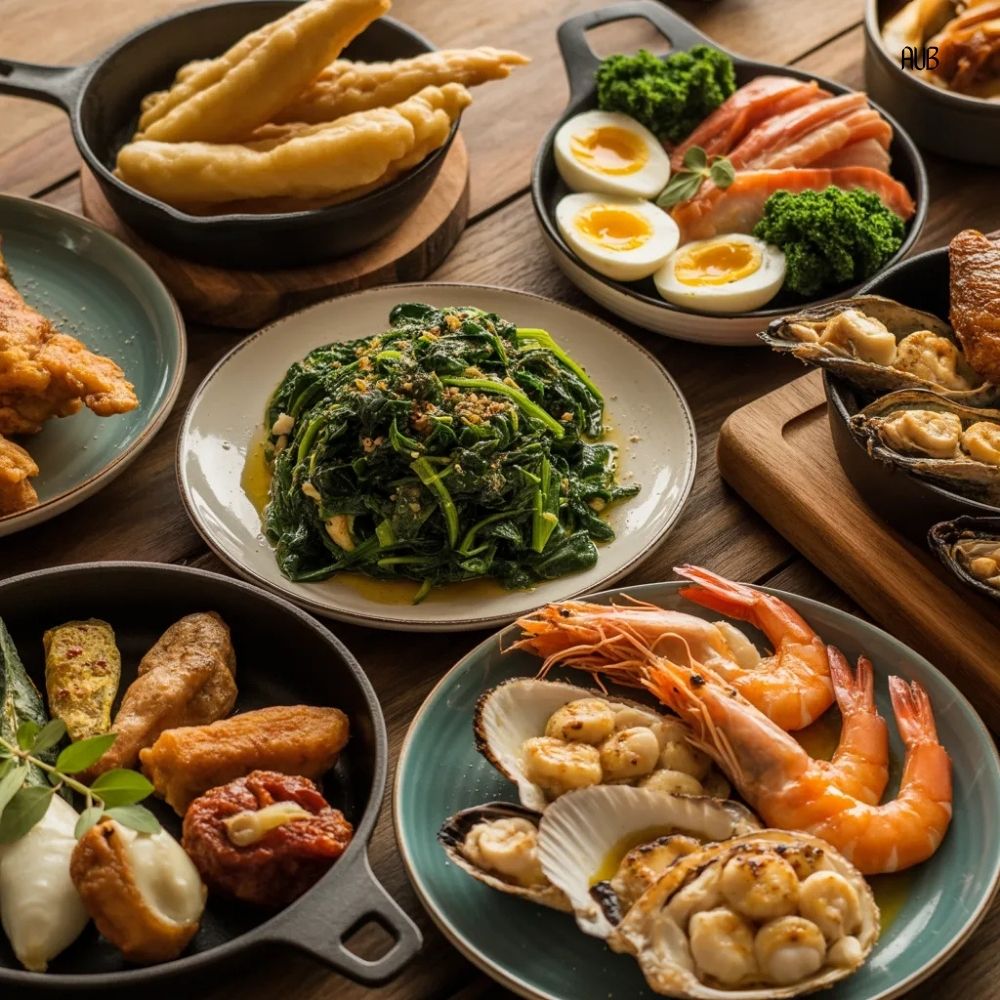
1. Cooked Leafy Greens
Leafy greens such as spinach, kale, mustard greens, or water spinach are rich in vitamins and natural nitrates. When cooked and then stored improperly, nitrates can convert into nitrites. While refrigeration slows this process, repeated reheating or improper storage increases the likelihood of chemical changes.
In addition to potential nitrite formation, cooked greens also lose water-soluble vitamins such as vitamin C over time. The longer they sit, the lower their nutritional value becomes.
If you cook leafy greens, it is best to consume them within a few hours and avoid reheating multiple times. If you must store them, cool them quickly and reheat thoroughly only once.
2. Soft-Boiled or Undercooked Eggs
Eggs are highly nutritious, but they are also vulnerable to bacterial contamination if not handled correctly. Soft-boiled eggs or dishes containing undercooked eggs should not be left at room temperature and should not be stored for extended periods.
Protein structures in eggs can degrade over time, and if storage temperature fluctuates, bacterial growth becomes more likely. For safety, consume cooked eggs within 24 hours and store them in airtight containers immediately after cooling.
Hard-boiled eggs are more stable but still should not be kept beyond a few days.
3. Cooked Seafood
Seafood is one of the most perishable cooked proteins. Fish and shellfish contain delicate proteins and fats that begin breaking down quickly, even under refrigeration. The breakdown process not only reduces flavor but may also increase the risk of spoilage.
Some types of fish also produce compounds such as histamine when improperly stored, which can cause foodborne illness symptoms even if the food does not appear spoiled.
Cooked seafood should ideally be consumed the same day. If refrigerated, it should be eaten within 24 hours and stored in tightly sealed containers at consistent cold temperatures.
4. Fried Foods
Fried foods such as fried chicken, fried rice, or deep-fried snacks lose texture quickly and often absorb moisture during storage. Beyond texture changes, reheating fried foods can increase the formation of oxidized fats, especially if oils were already heated to high temperatures during cooking.
Repeated reheating can degrade oil quality further, potentially increasing inflammatory compounds. For best quality and digestion, fried foods should be consumed fresh and in moderation.
5. Rice Left at Room Temperature
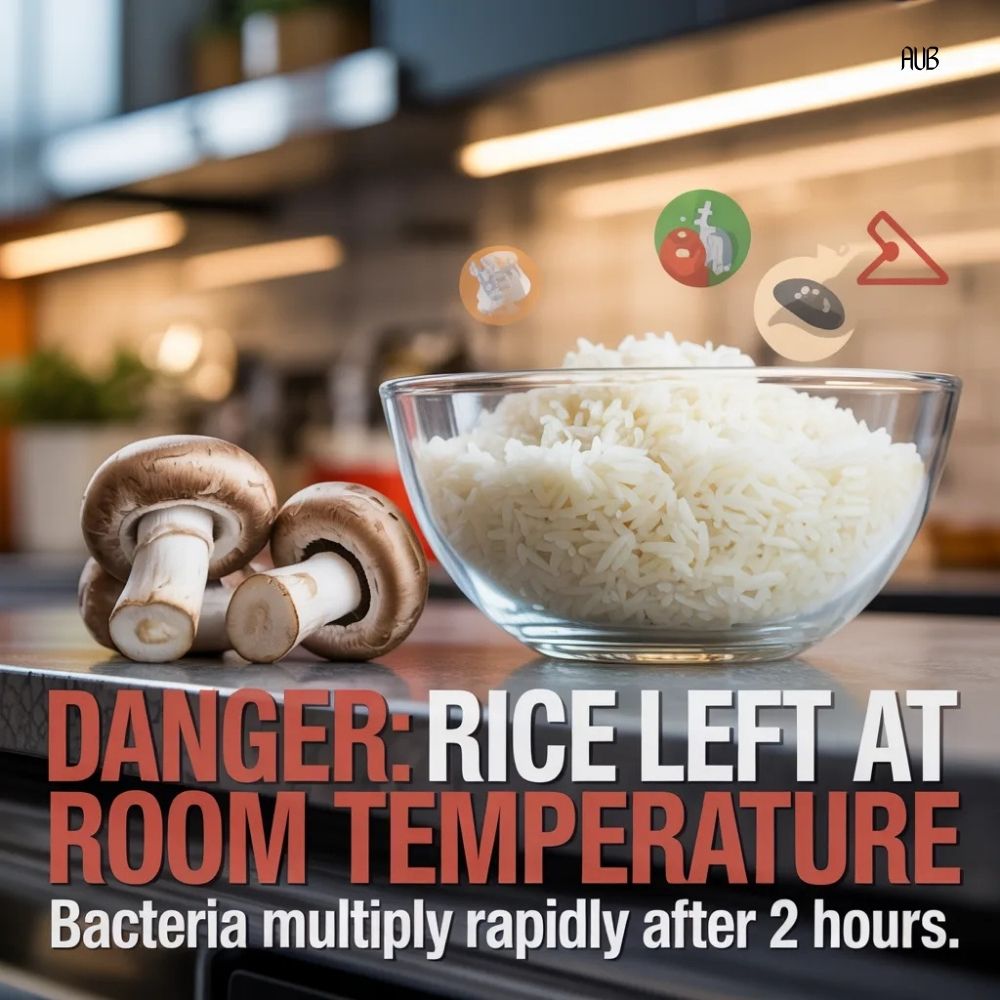
Rice itself is not inherently unsafe, but it can harbor Bacillus cereus spores, which survive cooking. If cooked rice is left at room temperature for several hours before refrigeration, these spores can multiply and produce toxins.
Refrigeration slows bacterial growth but does not reverse toxin production if contamination has already occurred.
To reduce risk, rice should be cooled quickly after cooking and stored in the refrigerator within one hour. It should be reheated thoroughly and consumed within a day.
6. Mushrooms
Mushrooms contain high water content and delicate cellular structures. When cooked and stored overnight, they often become slimy and lose nutritional quality. Improper storage can also encourage microbial growth due to their moisture content.
Cooked mushrooms are best eaten immediately or stored in airtight containers and consumed quickly. Raw mushrooms, when stored properly in breathable packaging, last longer than cooked ones.
7. Freshly Cut Fruit
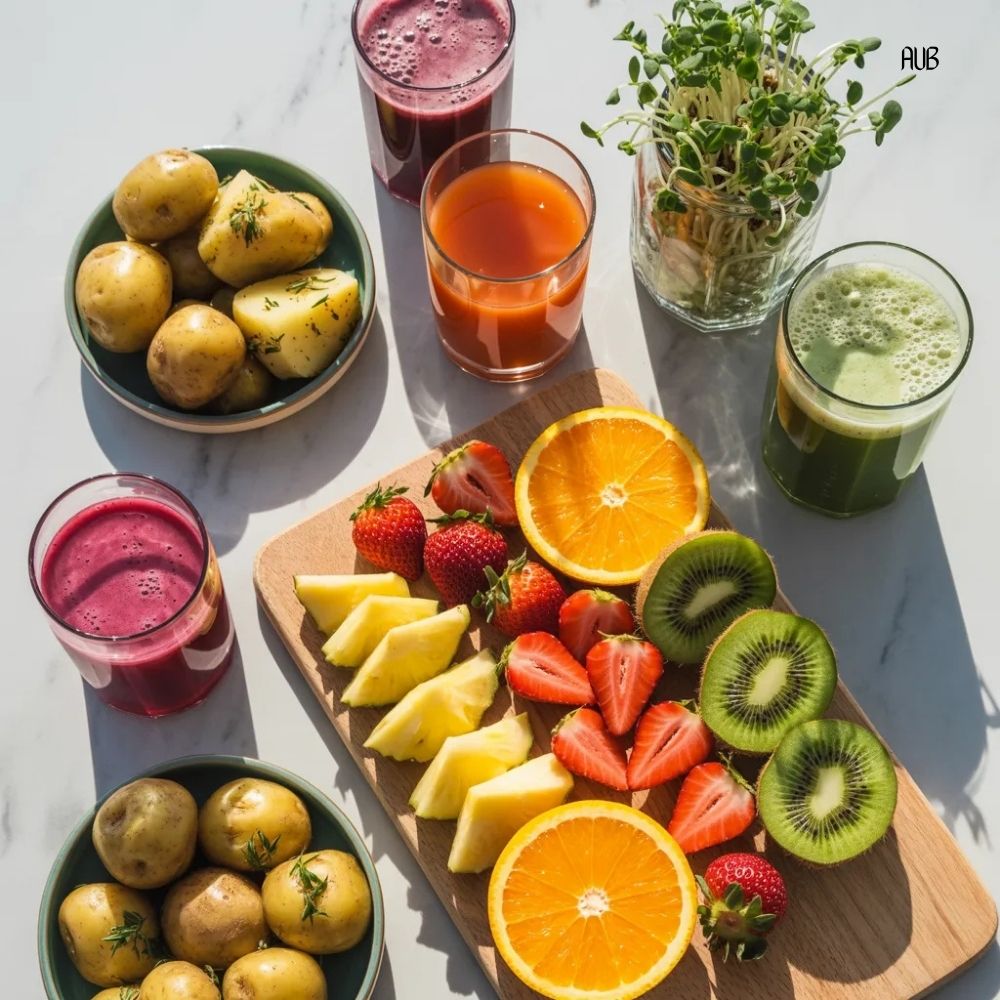
Cut fruit is exposed to oxygen, which accelerates nutrient degradation, particularly vitamin C. In addition to nutrient loss, exposed fruit surfaces become more susceptible to bacterial contamination if not stored properly.
While refrigeration helps slow oxidation, freshly cut fruit is best consumed within 24 hours. To preserve quality, store it in airtight containers and avoid leaving it uncovered.
8. Cooked Potatoes
Cooked potatoes can develop changes in starch structure when cooled and reheated repeatedly. While resistant starch formed during cooling may benefit digestion in some cases, improper storage increases the risk of bacterial contamination, especially if potatoes were left out before refrigeration.
Store cooked potatoes promptly and reheat only once. Discard if there is any sour odor or unusual texture.
9. Sprouts
Bean sprouts and similar varieties are particularly vulnerable to bacterial growth because they are grown in warm, moist conditions. Even after cooking, their moisture content makes them more sensitive to improper storage.
For best safety and nutrient retention, sprouts should be eaten fresh and stored carefully at cold temperatures for minimal time.
10. Fresh Juices Without Preservatives
Fresh fruit and vegetable juices are highly nutritious when consumed immediately. However, once extracted, nutrients such as vitamin C degrade quickly when exposed to air and light.
Additionally, natural sugars in juice create an environment where bacteria can multiply if not stored correctly. If consuming fresh juice, drink it soon after preparation and store it in airtight glass containers if necessary, limiting storage time.
Why Storage Time Matters
Food safety is not only about refrigeration. It involves temperature consistency, storage containers, oxygen exposure, and how quickly food is cooled after cooking.
Many food-related illnesses occur not because food was old, but because it was cooled too slowly or left out too long before refrigeration.
Nutrient degradation is also gradual. Vitamins, antioxidants, and delicate fats decline over time, especially in cooked or exposed foods. Eating foods closer to their preparation time generally preserves both safety and nutritional quality.
Practical Guidelines for Safer Storage
To reduce risk and preserve nutrients:
- Cool cooked food quickly before refrigerating.
- Store food in airtight containers.
- Keep refrigerator temperature at or below 40°F (4°C).
- Avoid reheating the same dish multiple times.
- Discard leftovers that smell unusual or show texture changes.
- When in doubt, prioritize safety over waste.
These habits are simple but significantly reduce foodborne illness risk.
A Balanced Perspective
It is not necessary to eliminate leftovers entirely. Properly stored leftovers can be part of a healthy, efficient routine. The key is understanding which foods are more sensitive and handling them carefully.
When meals are prepared with storage safety in mind, both nutrition and digestion are better supported.
Food safety does not require fear. It requires awareness and practical handling habits. Being attentive to storage timing protects not only nutrient quality but also overall well-being.