A shared bedroom carries more than two sets of clothes and two nightstands. It carries routines, preferences, habits, and the quiet negotiation of space. When storage is unclear or uneven, tension does not usually appear as an argument.
It appears as small daily irritations. A drawer that does not close fully. A chair that collects clothing. Shoes that migrate across the floor. Surfaces that slowly disappear under personal items. Clutter in a shared bedroom is rarely about laziness. It is usually about unclear storage structure.
Peaceful bedrooms are not necessarily larger. They are clearer. When both partners understand where things belong and have defined personal zones within the shared space, the room feels calmer almost immediately.
The four storage hacks below focus on reducing visual overload, clarifying ownership, and creating systems that work specifically for couples rather than single occupants. None require renovation. All are achievable within an afternoon.
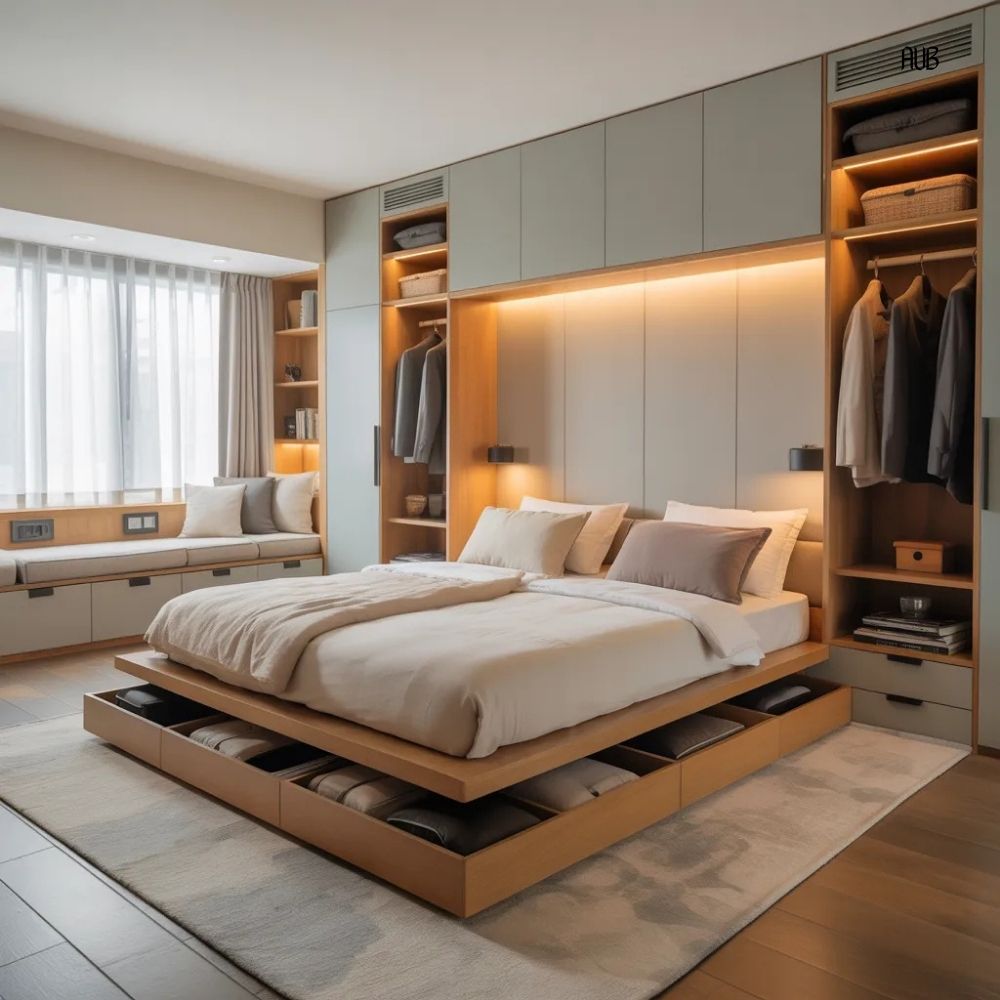
1. Create Defined Personal Zones Inside Shared Storage
One of the most common sources of subtle bedroom friction is undefined territory. When drawers, closet shelves, or surfaces are loosely shared, items blend together. Over time, this leads to confusion and quiet resentment about whose belongings are occupying which space.
Inside the closet, designate specific sections for each partner. If the closet is shared, split it vertically rather than mixing clothing types. For example, one partner uses the left side for hanging clothes and shelves, while the other uses the right side.
Inside dressers, assign full drawers rather than mixing clothing categories. Avoid sharing a single drawer for “miscellaneous” items. That drawer inevitably becomes a catch-all that neither person feels responsible for maintaining.
This simple territorial clarity reduces subtle tension. When each person has defined space, organization becomes self-managed rather than negotiated.
A peaceful bedroom often begins with visible boundaries that prevent overlap rather than correct it later.
2. Replace the “Clothing Chair” With a Controlled Landing Zone
Nearly every shared bedroom develops a chair, bench, or corner that collects clothing in transition. These are items that are not dirty enough for the laundry basket but not clean enough to return to drawers.
Over time, this informal landing zone becomes cluttered and visually heavy. Instead of trying to eliminate the habit entirely, refine it.
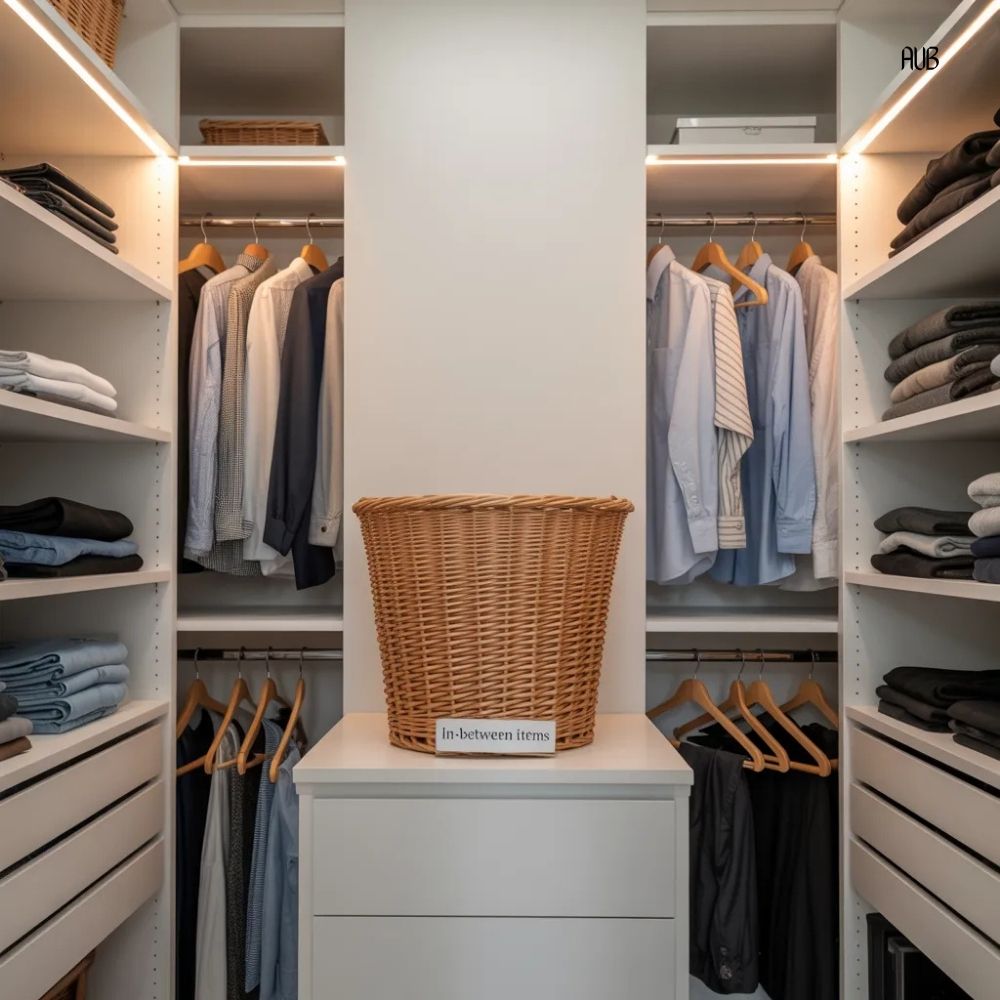
Introduce a small, designated clothing valet or slim basket specifically for in-between items. The rule is simple: only a limited number of pieces can occupy this space at once. When it fills, something must either return to storage or move to laundry.
You can place this container inside the closet to reduce visual impact or choose a structured valet stand that keeps items vertical rather than piled. This approach acknowledges reality while preventing uncontrolled accumulation.
3. Use Under-Bed Storage Strategically, Not Randomly
Under-bed space is often either ignored or filled haphazardly with mismatched boxes. When used strategically, it can dramatically reduce visible clutter.
Choose uniform, low-profile containers that slide easily. Store items that are seasonal or rarely accessed, such as off-season clothing, spare bedding, or extra pillows.
Avoid storing frequently used items under the bed. The inconvenience of constant retrieval discourages proper use and leads to items drifting back into visible spaces. Label containers clearly. Even simple adhesive labels prevent repeated searching.
When bulky or seasonal items are relocated out of closets and visible surfaces, breathing room increases immediately. The room feels lighter because visual mass decreases. Under-bed storage works best when it supports rotation rather than daily access.
4. Simplify Surfaces With Contained Storage, Not Open Piles
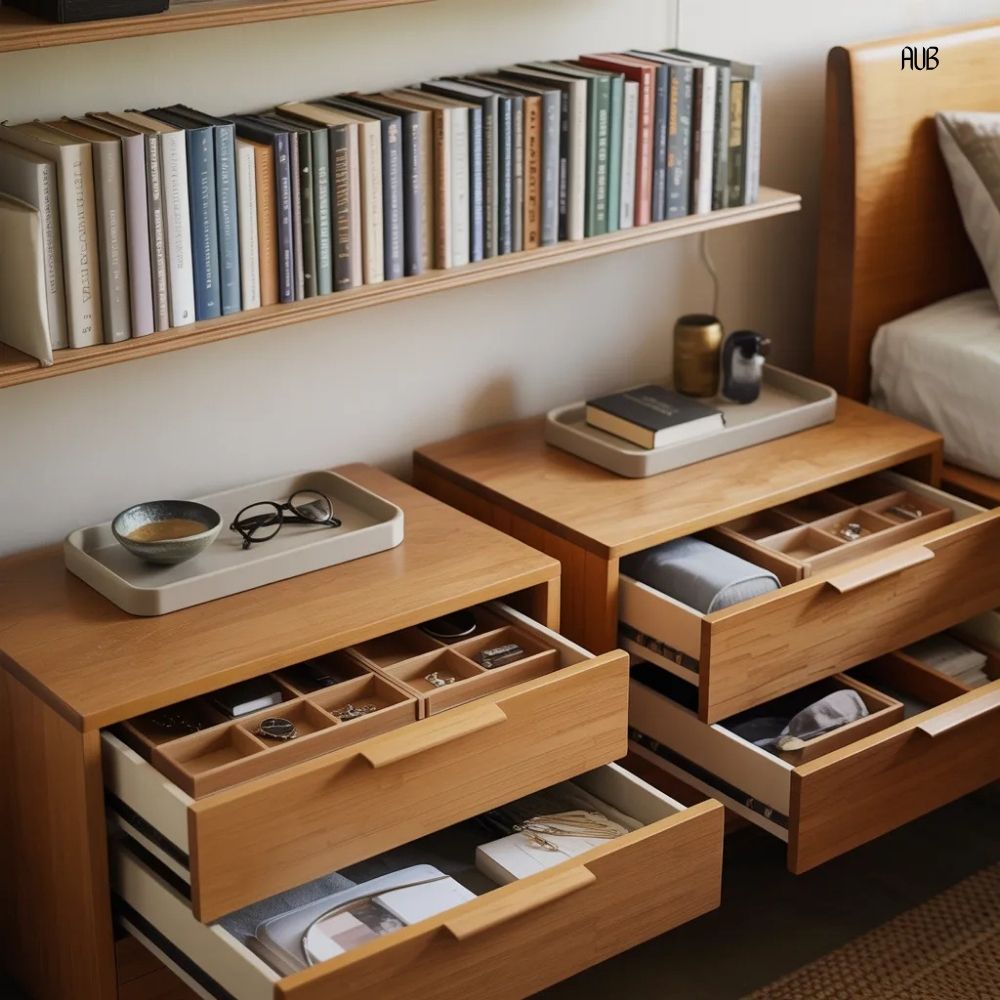
Bedrooms feel chaotic when flat surfaces collect uncontained objects. Nightstands, dressers, and shelves become landing spots for jewelry, watches, books, electronics, receipts, and personal items. Rather than eliminating items entirely, introduce contained storage that maintains function without visual clutter.
For example, place a small tray on each nightstand to hold daily essentials. Use drawer dividers inside dressers to prevent small items from spreading. Install slim wall-mounted shelves for books instead of stacking them on dressers.
If both partners use the same dresser top for getting ready, consider adding two small containers instead of one shared pile. Separate containers prevent subtle ownership confusion.
Visual calm increases when items have boundaries. A peaceful bedroom does not require emptiness. It requires containment.
Why These Storage Fixes Work Especially Well for Couples
In single-occupant bedrooms, disorganization affects only one person. In shared bedrooms, clutter compounds because habits overlap.
- Undefined space leads to subtle negotiation.
- Open surfaces invite accumulation.
- Transitional clothing expands without limits.
- Seasonal items occupy valuable storage year-round.
These four storage adjustments reduce the need for conversation about where things belong. When storage systems reduce ambiguity, tension decreases naturally.
Implementing These Changes Without Overwhelm
Start with the area that creates the most visible stress. For many couples, that is the clothing transition zone. Addressing the clothing chair often produces immediate relief.
Next, clarify closet or drawer zones. This may require a brief conversation about fairness and layout, but once defined, maintenance becomes easier.
Under-bed storage and surface containment can follow gradually. Avoid trying to reorganize the entire room in one evening. Sustainable calm builds in layers.
The Long-Term Effect on Atmosphere
Bedrooms are intended to feel restorative. When visual clutter accumulates, the nervous system remains subtly alert. Small irritations stack, and the room loses its sense of retreat. When storage is structured clearly, the environment changes.
Walking into a room where clothing is contained, surfaces are simplified, and space feels evenly distributed lowers tension almost immediately.
Shared bedrooms become more peaceful not because they are larger or more decorative, but because their systems are intentional.
And in shared living, intentional systems are what transform daily space into something that feels calm rather than crowded.