Shared cooking can feel collaborative and energizing, or it can feel crowded and inefficient. The difference rarely lies in skill level. It lies in counter space management.
Kitchen counters are the most active work surfaces in the home. They hold cutting boards, mixing bowls, ingredients, appliances, and serving dishes. When two people move through that space without defined structure, overlap happens quickly.
One person reaches for a knife while the other sets down groceries. Ingredients pile up in the same corner. Finished items mix with items still being prepared. Most tension in shared cooking is not about disagreement. It is about congestion.
The solution is not expanding your kitchen. It is setting a few clear counter rules that reduce visual clutter and physical interference.
The five rules below are designed specifically for couples who cook together regularly. They create order without rigidity and make meal prep feel coordinated instead of chaotic.
Rule 1: Define Active Prep Zones Before Cooking Begins
Before any ingredients come out, take thirty seconds to define space. One partner takes the left side of the counter. The other takes the right. If space is limited, designate one person as primary prep and the other as support, with clearly separated areas.
For example, one person might handle chopping vegetables while the other manages stovetop tasks and seasoning. This small pre-agreement prevents physical overlap once cooking begins.
Without defined zones, both partners instinctively gravitate toward the same central area. With zones established, movement becomes smoother and more predictable. When space is respected, cooking feels cooperative rather than competitive.
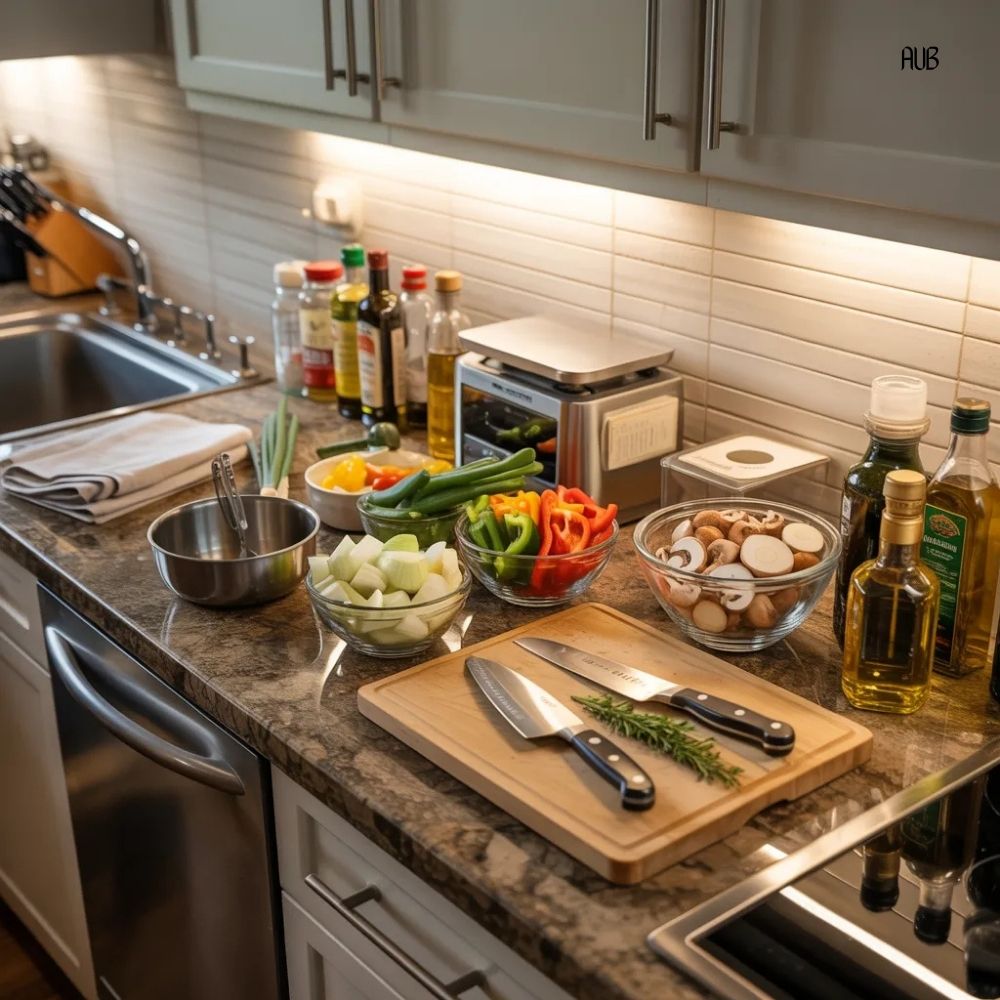
Rule 2: Keep Only Current Ingredients on the Counter
Counters become cluttered quickly when all ingredients are removed at once. Instead of placing every grocery item out during prep, follow a staged approach.
Bring out only what you are actively using. Once an ingredient has been measured or chopped, return it to the refrigerator or pantry immediately.
For example, if you are using garlic, olive oil, and onions for the first step, keep only those items on the counter. After they are added to the pan, clear that section before moving to the next step.
This habit reduces visual overload and preserves workspace. It also prevents confusion about what has already been used and what remains. Staged ingredients create clarity.
Rule 3: Maintain One Clear “Landing Strip”
In shared kitchens, items are constantly moving. Groceries arrive. Dishes come out of the dishwasher. Finished plates need temporary placement. Without a defined landing area, these items spread across prep space.
Designate one narrow section of counter as the landing strip. This area is reserved for temporary placement only. Groceries go here before being stored. Clean dishes rest here briefly before being put away. Finished components sit here until plated.
Because the landing strip is contained, it does not invade active prep zones. This simple boundary reduces cross-traffic and protects workflow.
Rule 4: Limit Counter Appliances to Essentials
Permanent countertop appliances consume valuable prep space. Evaluate which appliances are used daily and which are used occasionally.
Daily items such as a coffee maker or toaster may remain accessible. Specialty appliances such as stand mixers, air fryers, or blenders can be relocated to cabinets when not in use.
The more open counter surface available, the easier it is for two people to cook simultaneously. Clear space equals flexibility.
Reducing permanent counter items creates room for movement rather than forcing both partners into the same narrow prep area.

Rule 5: Reset the Counter Before Sitting Down
The end of cooking often transitions quickly into eating. Counters remain crowded with used tools and stray ingredients. Before sitting down, take three minutes together to restore the counter to baseline.
Return unused ingredients to storage. Load knives and cutting boards into the sink or dishwasher. Wipe visible spills. Consolidate leftovers. This reset ensures that cleanup after dinner is lighter and prevents clutter from lingering into the next morning.
More importantly, it protects the rhythm of shared cooking. When counters start fresh the next day, cooking together feels inviting rather than burdensome.
Implementing the Rules Gradually
You do not need to introduce all five rules at once. Start with defining prep zones before cooking. This single change often improves coordination immediately.
Next, introduce staged ingredient removal to reduce clutter. Over time, the landing strip and appliance limits become natural extensions.
Finally, adopt the three-minute reset habit to protect long-term order. When systems are layered gradually, they feel sustainable rather than restrictive.
The Long-Term Effect on Shared Cooking
Cooking together should feel collaborative, not congested. When counters are clear and movement is predictable, communication improves naturally. Instead of negotiating space verbally, each partner operates within defined boundaries.
Small systems prevent small irritations from accumulating. Over time, these rules turn cooking from a rushed activity into a smoother shared routine. The kitchen remains functional even when both partners are active.
And in shared living, functional systems are what allow collaboration to feel enjoyable rather than overwhelming. Clear counters support clear movement. Clear movement supports better partnership.
Often, it is not the recipe that determines how enjoyable cooking feels. It is the structure around it.