In long-term relationships, appreciation does not usually disappear. What tends to fade is visibility.
As responsibilities increase and daily life becomes more structured around work, home maintenance, and family obligations, expressions of gratitude often become internal rather than spoken. Partners continue noticing effort, kindness, and patience, but they assume the other person already knows they are valued.
Over time, this quiet assumption can reduce the frequency of expressed appreciation. The relationship still functions, but acknowledgment becomes occasional instead of consistent.
A memory jar system offers a practical way to preserve appreciation without turning it into a dramatic ritual. It introduces structure to something that often relies on spontaneity. When appreciation has a home, it is more likely to be recorded, revisited, and reinforced.
This system is simple enough to maintain throughout the year and meaningful enough to strengthen connection steadily rather than intensely.
Why Appreciation Benefits From a System
Gratitude feels natural in the early stages of a relationship because everything feels new. As years pass, daily effort becomes routine. Paying bills, managing schedules, cooking meals, fixing problems, and supporting each other emotionally all become part of normal life.
When something becomes normal, it is less likely to be verbalized. This does not mean couples stop valuing each other. It means attention shifts toward logistics and responsibilities. Without a structure that prompts reflection, many meaningful moments pass without being preserved in memory.
A memory jar creates a lightweight framework that makes appreciation visible again. It does not force emotion. It simply encourages noticing and recording. Over time, that repeated noticing changes the tone of the relationship.
How the Memory Jar System Works
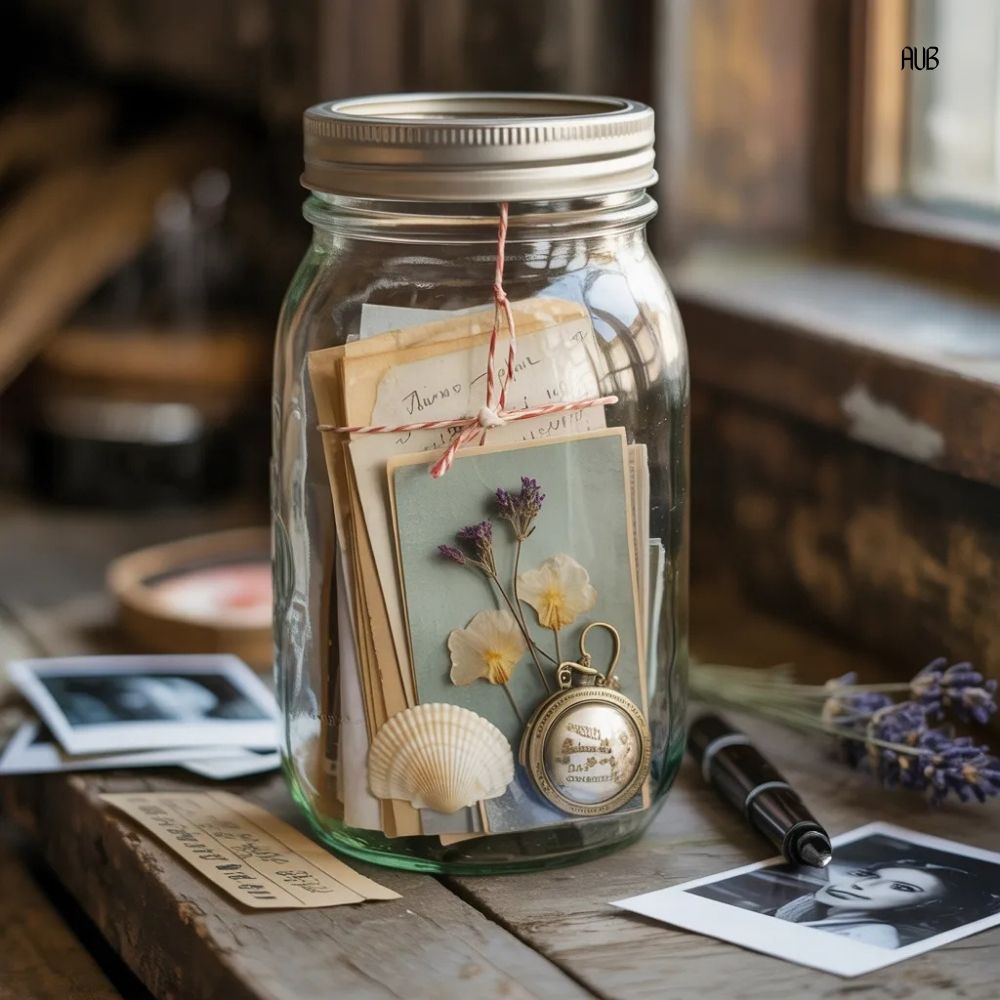
At its core, the system involves choosing one container dedicated to recording meaningful moments throughout the year. Both partners add short written notes that capture specific examples of appreciation, shared laughter, resilience, or support.
The jar is opened at a predetermined time, often at the end of the year, on an anniversary, or during a quiet holiday evening.
The power of the system lies in repetition rather than intensity. Each note is small. The accumulation is what matters. To keep the system sustainable, it should follow three guiding principles:
- Notes are short and specific.
- Entries are occasional but consistent.
- The jar is reviewed intentionally at a chosen time.
This creates rhythm without pressure.

Setting It Up in a Way That Feels Natural
Begin by selecting a container that fits your home and style. It can be a simple glass jar, a small wooden box, or a decorative container that blends with your bedroom or living space. If you prefer digital tools, you can create a shared document labeled clearly for the same purpose.
The important element is agreement. Both partners should understand what the jar represents and how it will be used. During your initial conversation, decide together:
- Where the jar will live
- How often you would like to add entries
- When you will open and read them
- Whether notes are private until review or read aloud immediately
Some couples prefer the surprise of reading notes months later. Others enjoy reading entries together as they are written. Choose the version that aligns with your personalities.
Keep expectations realistic. Two to four notes per month from each partner is more sustainable than daily entries.
Writing Entries That Carry Weight
Instead of writing broad praise, focus on observable behavior or shared experiences. For example, you might write about how your spouse handled a stressful situation calmly, showed patience during a difficult conversation, or quietly took care of a responsibility that reduced your own stress.
Specific moments create emotional recall later. When you revisit the note months later, the event returns vividly because it is anchored in detail.
Entries do not need to be long. One or two sentences is enough. The goal is to capture the essence of the moment without overcomplicating the process.
You may also choose to include shared experiences such as trips, inside jokes, or small victories that represent growth or teamwork. Over time, the jar becomes a documented record of partnership in action.
Making It a Habit Without Turning It Into an Obligation
The system works best when it feels natural rather than forced. One helpful approach is to connect writing notes to an existing rhythm. For example, you might choose to add entries at the end of each month, after a meaningful event, or whenever something stands out.
If reminders help at the beginning, set a quiet monthly notification. However, avoid turning it into another item on an overwhelming to-do list. If you miss a month, simply resume without trying to recreate every missed moment. Consistency matters more than frequency.
When the jar becomes part of the environment, awareness increases naturally. You begin noticing moments worth recording because you know there is a place for them.
Choosing the Right Time to Open the Jar
Many couples select a meaningful date such as an anniversary or the final evening of the year. Others prefer a quiet weekend when life feels less rushed.
Set aside uninterrupted time. Sit together and read each note slowly. Allow space for discussion if it arises naturally.
What often surprises couples is the volume of small, positive moments that accumulated quietly. Reading them consecutively shifts perspective. It highlights cooperation, resilience, humor, and care that may have felt ordinary in the moment but significant in retrospect.
This review ritual often strengthens emotional security because it provides tangible evidence of partnership working well.
The Psychological Impact of Documented Appreciation
Recording appreciation changes perception in subtle ways. First, it increases attentiveness. When you know you will document meaningful moments, you become more aware of them in real time.
Second, it reinforces positive memory. Instead of recalling only stressful periods or unresolved conflicts, you create a written archive of stability and care.
Third, it strengthens goodwill. When appreciation is expressed consistently, it creates emotional margin. Disagreements are easier to navigate because the foundation feels acknowledged.
Over time, the jar becomes more than a container. It becomes a reflection of the relationship’s steady strengths.
Adapting the System as Your Relationship Evolves
As life circumstances change, you can adjust how the memory jar functions.
If you have children, you might include family milestones. If work becomes intense, you might focus more on support and teamwork during demanding seasons. If you experience a challenging period, the jar can help balance perspective by ensuring that positive efforts are still recorded.
Some couples eventually expand the concept by adding categories, such as gratitude notes, shared achievements, or lessons learned during difficult times. Others prefer to keep it simple indefinitely. The structure should serve the relationship, not complicate it.
The Long-Term Outcome
The memory jar does not eliminate conflict or guarantee constant harmony. It does something quieter and more sustainable. It builds a visible record of care.
At the end of a year, instead of trying to remember what went well, you hold proof in your hands. You see evidence of patience, effort, laughter, growth, and resilience.
Over time, this shifts how couples interpret daily life. Instead of assuming appreciation, they practice expressing it. Instead of relying solely on memory, they create a shared archive.
The result is not dramatic transformation. It is steady reinforcement. And steady reinforcement is what keeps appreciation alive long after the novelty of early relationship stages has passed.