Duplicate grocery purchases rarely happen because couples are careless. They happen because information is fragmented.
One partner buys pasta because they do not see any in the pantry. The other partner already bought it two days earlier and stored it behind something else. A second carton of milk appears because no one was certain how much was left. Snacks multiply because each person shops independently without visibility.
Over time, this pattern wastes money, crowds storage space, and creates mild but repetitive frustration. The conversation is familiar: “I didn’t know we already had that.” It is not a serious conflict, but it reflects a missing system.
Preventing duplicate purchases does not require strict rules or complicated tracking apps. It requires visibility, structure, and one shared process that both partners use consistently. The system below is simple enough to maintain and strong enough to eliminate most repeat purchases within weeks.
Why Duplicate Purchases Happen in Shared Households
In many homes, grocery information lives in three places:
- In someone’s head
- In a text message thread
- On a paper list that gets misplaced
The pantry may be loosely organized, which makes inventory unclear. The refrigerator may hide items behind others. Partners shop at different times and assume the other has not restocked yet.
When visibility is low, uncertainty increases. When uncertainty increases, people default to buying “just in case.” The goal of this system is to replace uncertainty with clarity.

Step 1: Create a Visible Inventory Zone in the Pantry
Start by reorganizing the pantry so that similar items are grouped and visible. Designate clear sections such as:
- Grains and pasta
- Canned goods
- Breakfast items
- Snacks
- Baking supplies
Within each section, avoid stacking items behind one another. Use simple bins or clear containers to keep items upright and visible.
If space allows, dedicate one small shelf to frequently replaced staples such as pasta, rice, canned tomatoes, and sauces. This becomes your quick visual reference zone.
The objective is not aesthetic perfection. It is immediate recognition. When you open the pantry and can see inventory clearly at eye level, guesswork decreases significantly.
Step 2: Use the “Last One Forward” Rule
One of the most effective and low-effort grocery habits is the last-one-forward rule. When an item is opened and you realize it is the final unit, move it to the front of its section.
For example, if you open the last box of cereal, place it visibly at the front. If you begin the final jar of peanut butter, move it forward in the pantry. This small movement serves as a visual reminder that the item is nearly depleted.
You do not need a written note immediately. The physical cue does the first level of communication. When both partners adopt this habit, low-stock items become obvious without verbal reminders.
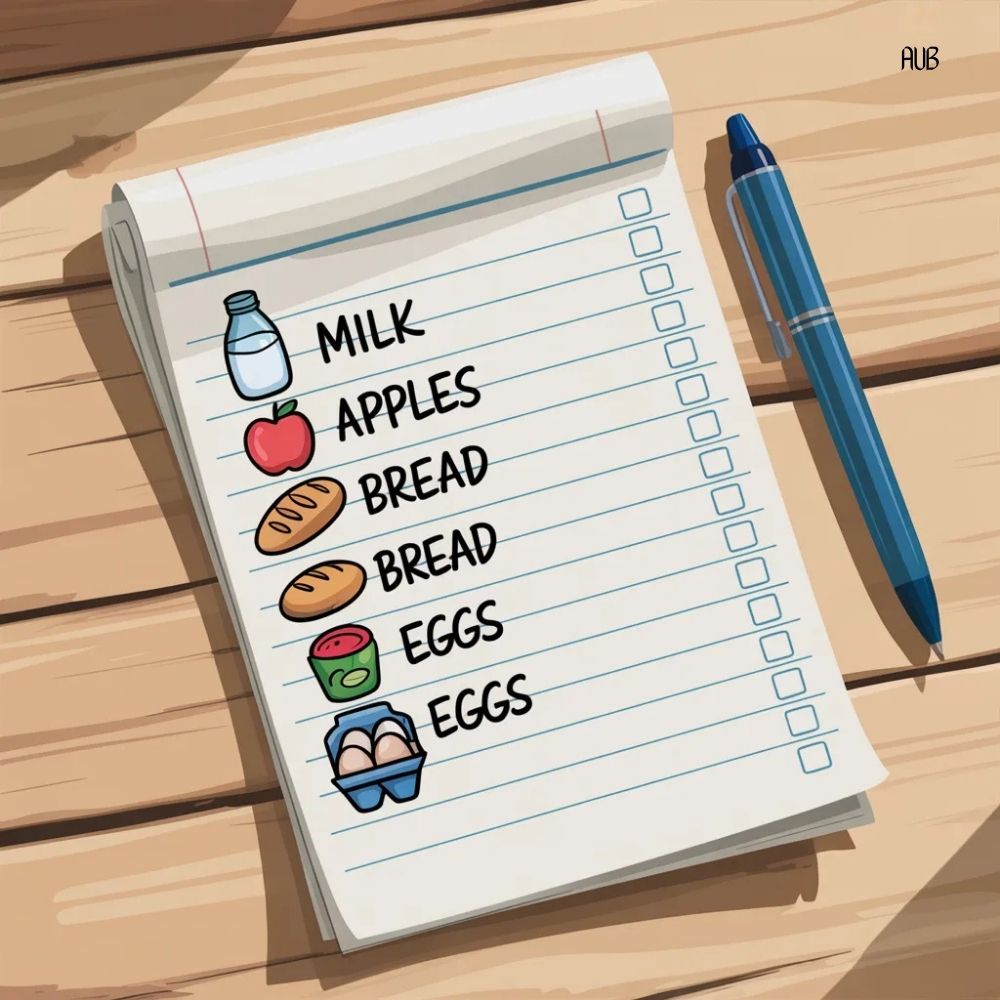
Step 3: Introduce One Shared Running Grocery List
Avoid multiple list locations. Choose one shared list method and commit to it. This could be:
- A shared notes app
- A dedicated grocery app
- A small whiteboard inside a pantry door
- A magnetic notepad on the fridge
The tool matters less than consistency.
The rule is simple: when something runs low or is used up, it goes on the shared list immediately. Not later. Not mentally. Immediately.
If you are cooking and use the last onion, take ten seconds to add onions to the shared list before leaving the kitchen. This prevents the common scenario where both partners assume the other will remember.
Step 4: Assign One “Primary Shopper” Per Trip
Duplicate purchases often happen when both partners shop independently without coordination. To reduce overlap, assign one person as the primary shopper for each trip. This does not mean one partner always shops. It means one trip equals one responsible buyer.
Before leaving, the primary shopper checks:
- The shared grocery list
- The pantry quick-reference shelf
- The refrigerator leftover zone
This quick check takes less than five minutes but dramatically improves accuracy. When shopping responsibility rotates but remains singular per trip, coordination improves.
Step 5: Create a Dedicated “Backstock” Bin
In households that buy in bulk or during sales, overbuying becomes common. Instead of storing extra items randomly throughout the pantry, create one labeled backstock bin.
This bin holds unopened duplicates intentionally purchased for future use. When restocking, items from the backstock bin are moved into the main shelf before new purchases are made.
This prevents situations where an extra package is hidden behind visible items and forgotten. When the backstock bin is empty, it becomes clear that replenishment is needed.
Step 6: Conduct a 10-Minute Weekly Inventory Check
Once per week, ideally before your primary grocery trip, spend ten minutes scanning:
- Pantry sections
- Refrigerator shelves
- Freezer contents
This is not a deep clean. It is a visibility reset. Check expiration dates, consolidate similar items, and confirm what is already available.
This small weekly rhythm prevents surprise discoveries of expired food and reduces impulse purchases. Over time, the weekly check becomes automatic and requires minimal effort.
Handling Different Shopping Styles
Some couples approach grocery shopping differently. One may prefer frequent small trips. The other may prefer bulk buying once per week. The system can accommodate both styles.
If one partner shops more often, they simply use the shared list and check the quick-reference shelf before each visit.
If both partners occasionally make independent trips, agree to check the shared list before purchasing anything outside it. Clarity in process matters more than uniform shopping habits.
The Long-Term Benefit
Reducing duplicate grocery purchases does more than save money. It reduces clutter and quiet irritation.
When the pantry is organized, meals feel easier to prepare. When the fridge is clear, leftovers get used rather than wasted. When the shopping list is centralized, responsibility feels shared rather than assumed.
In shared households, clarity prevents friction. A simple grocery system turns what used to be a recurring annoyance into a smooth, almost invisible routine. And when small routines run smoothly, daily life feels lighter.