Bathrooms become overcrowded gradually. No single item causes the problem. It builds through accumulation.
A new skincare product joins an already full shelf. Extra shampoo bottles stack behind current ones. Travel-size items linger long after trips end. Towels shift from folded to piled. Counter space shrinks quietly.
In shared households, the problem multiplies. Two routines overlap. Two sets of preferences compete for limited square footage. Without clear boundaries, surfaces fill until the room feels smaller than it actually is.
The one shelf rule solves this by introducing a visible limit. Each person receives one clearly defined shelf or storage zone for personal products. Everything that belongs to them must fit within that boundary.
When the shelf is full, something must leave before something new arrives. The rule is simple. Its impact is immediate.
Why Bathrooms Overcrowd So Easily
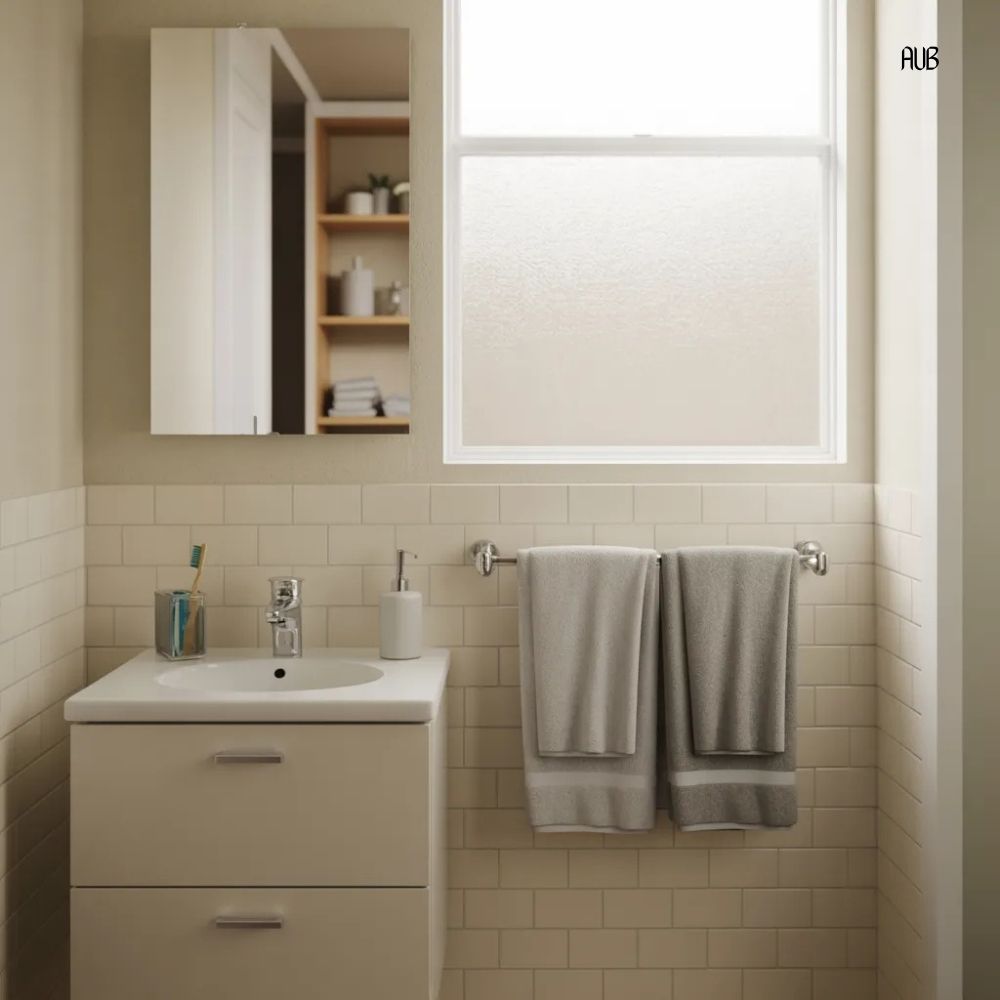
Bathrooms have limited storage compared to other rooms. Most contain:
- A vanity with small drawers
- One or two cabinet shelves
- A narrow medicine cabinet
- Minimal counter space
Yet they store products that accumulate quickly. Skincare routines expand. Hair products multiply. Backup toiletries are purchased in bulk. Items used occasionally remain visible daily.
Because bathrooms are used multiple times per day, small increases in clutter feel magnified. Visual congestion makes the room feel tense and less restorative.
The issue is rarely lack of storage. It is lack of limits. When no boundary exists, products expand to fill every available inch.
What the One Shelf Rule Means in Practice
The rule creates a non-negotiable container for personal items. If you share a vanity cabinet, assign one shelf to each partner. If space is limited, use stackable risers to create vertical divisions. If shelving is uneven, compensate with baskets or labeled bins.
Each person’s products must fit within their allocated space. Shared items such as toothpaste, soap, and extra toilet paper live in a separate shared zone. The clarity reduces overlap. When boundaries are visible, organization becomes self-managed.
Step 1: Remove Everything Before Assigning Space
Before implementing the rule, empty the storage area completely. Lay all items out on a flat surface. This visual inventory often reveals duplicates, expired products, and rarely used items. Sort into three categories:
- Daily use
- Occasional use
- Unnecessary or expired
Discard expired items. Relocate occasional-use products to secondary storage such as a linen closet or under-sink bin.
Only daily-use essentials should return to the designated shelf. This reset ensures the shelf boundary is meaningful rather than overcrowded from the start.
Step 2: Define Clear Personal Zones
Once the area is empty, define shelf ownership explicitly. If one partner has more products due to routine differences, consider adjusting height rather than expanding horizontally. Use shelf risers or vertical organizers to maximize height without crossing boundaries.
Place a small label discreetly inside the cabinet if needed. Not as decoration, but as clarity. When ownership is visible, there is less accidental sprawl.
Step 3: Contain Small Items With Bins or Trays
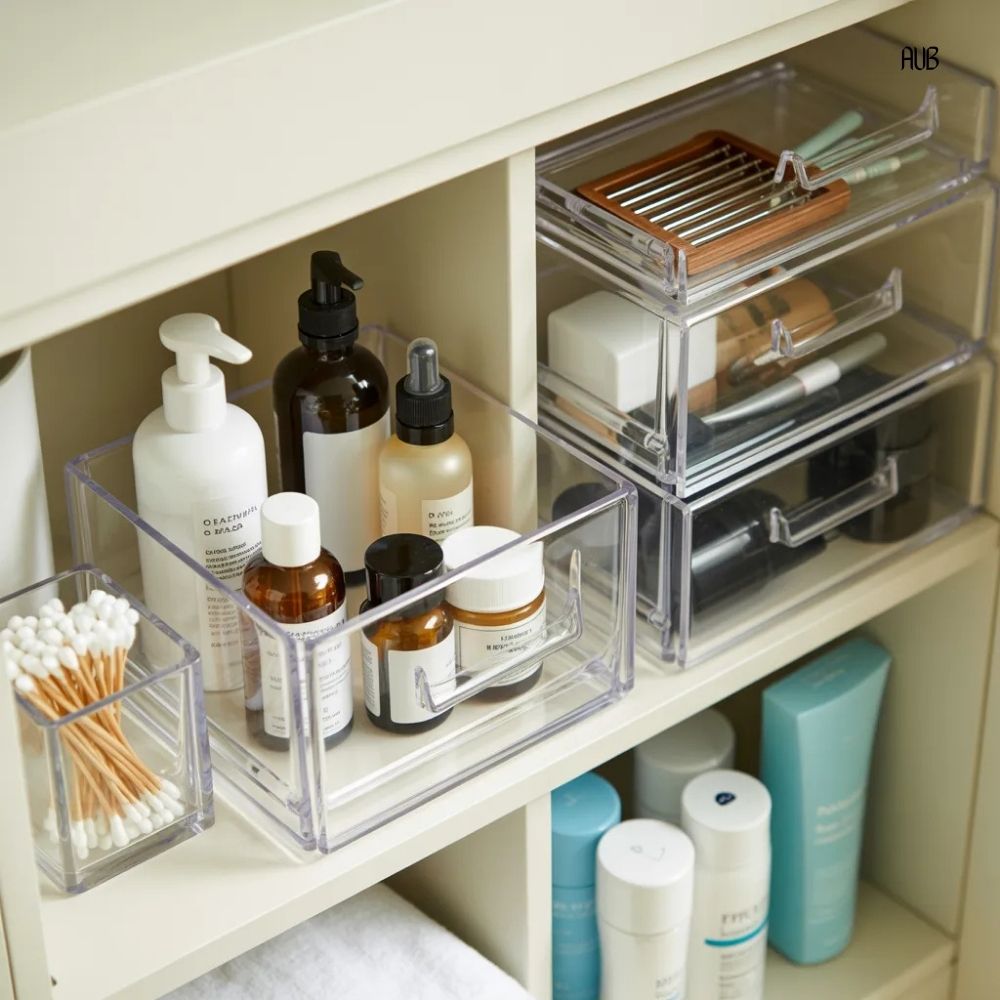
Loose items create visual noise. Use small clear bins, trays, or drawer dividers to group similar products. For example, keep all skincare bottles together in one container rather than scattered across the shelf.
Containment creates order without reducing quantity immediately. When items are grouped intentionally, shelves appear calmer and more spacious.
Step 4: Establish the “One In, One Out” Habit
The strength of the one shelf rule lies in maintenance. If a new product enters, evaluate whether space exists. If the shelf is already full, remove or finish something before adding the new item.
This prevents slow expansion. It also encourages thoughtful purchasing. When you know space is limited, impulse buying decreases naturally. The habit does not require discussion every time. The boundary speaks for itself.
Step 5: Separate Backup Stock From Daily Use
One common reason bathrooms overflow is backup storage living alongside active products. Instead of stacking three extra bottles of shampoo next to the current one, move backups to a secondary location such as a linen closet or designated storage bin.
Only one active product per category should occupy the primary shelf. When backups are separated, daily space feels lighter.
Why This Rule Works Especially Well for Couples
In shared bathrooms, ambiguity leads to expansion. If shelves are not clearly divided, one partner may assume unused space is available. Over time, boundaries blur. Frustration builds quietly.
The one shelf rule eliminates that ambiguity. Each partner controls their own zone. Shared areas remain neutral. Responsibility is clear. This reduces subtle tension about whose products are taking up more room.
Handling Unequal Product Volume
If one partner genuinely uses fewer items, resist the temptation to leave unused space open for expansion. Instead, use that extra space for shared items or leave it intentionally empty.
Visible breathing room contributes to calm. Empty space is not wasted space. It is visual rest.
What to Expect After Implementation
Immediately after resetting and assigning shelves, the bathroom feels larger. Counters clear. Cabinets close smoothly. Daily routines move faster because items are easier to find.
Within weeks, purchasing habits may shift. Awareness of shelf capacity often reduces unnecessary additions. The space maintains stability because the boundary remains constant.
Long-Term Benefits Beyond Organization
A calm bathroom contributes to calmer mornings and evenings. When you open a cabinet and see only what you use, there is less decision fatigue. When surfaces are clear, cleaning becomes faster. When personal zones are respected, subtle friction decreases.
Small environmental changes influence mood more than most people realize. The one shelf rule does not eliminate every storage challenge. It introduces structure where accumulation once ruled.
And structure, especially in small shared spaces, is what keeps rooms feeling functional rather than crowded. Over time, that simplicity reinforces daily ease. In a space used multiple times per day, ease matters.