Few household frustrations feel as repetitive as searching for essentials on the way out the door. Keys disappear between couch cushions. Sunglasses migrate from kitchen counters to bedroom nightstands. Mail piles up in unpredictable places.
One partner leaves early and assumes the other moved something. The day begins with mild stress before it has fully started. This pattern is not about carelessness. It is about a missing structure.
In many homes, the entryway functions as a passage rather than a system. Items land wherever there is space. Without defined storage zones, everyday objects drift across rooms. Each morning becomes a small scavenger hunt.
A simple entryway setup eliminates that daily friction by creating a predictable drop zone. The goal is not decorative perfection. The goal is clarity. When every essential item has a permanent home within arm’s reach of the door, misplaced-item stress drops dramatically.
This system works especially well for couples because it removes the need to ask, “Have you seen my…?” and replaces it with visual certainty.
Why Entryways Become Chaos Zones
Entryways carry high traffic and low attention. They are transitional spaces, not destination rooms. When you walk in after a long day, your focus is elsewhere. Bags are set down quickly. Shoes are kicked off. Keys are placed on the nearest flat surface.
Over time, these small habits compound. Without defined boundaries, surfaces collect items that do not belong there. Mail mixes with receipts. Sunglasses rest beside unopened packages. Charging cables migrate toward outlets far from the door.
The stress shows up the next morning when you need to leave quickly and cannot locate something essential. The solution is not more reminders. It is fewer decisions.
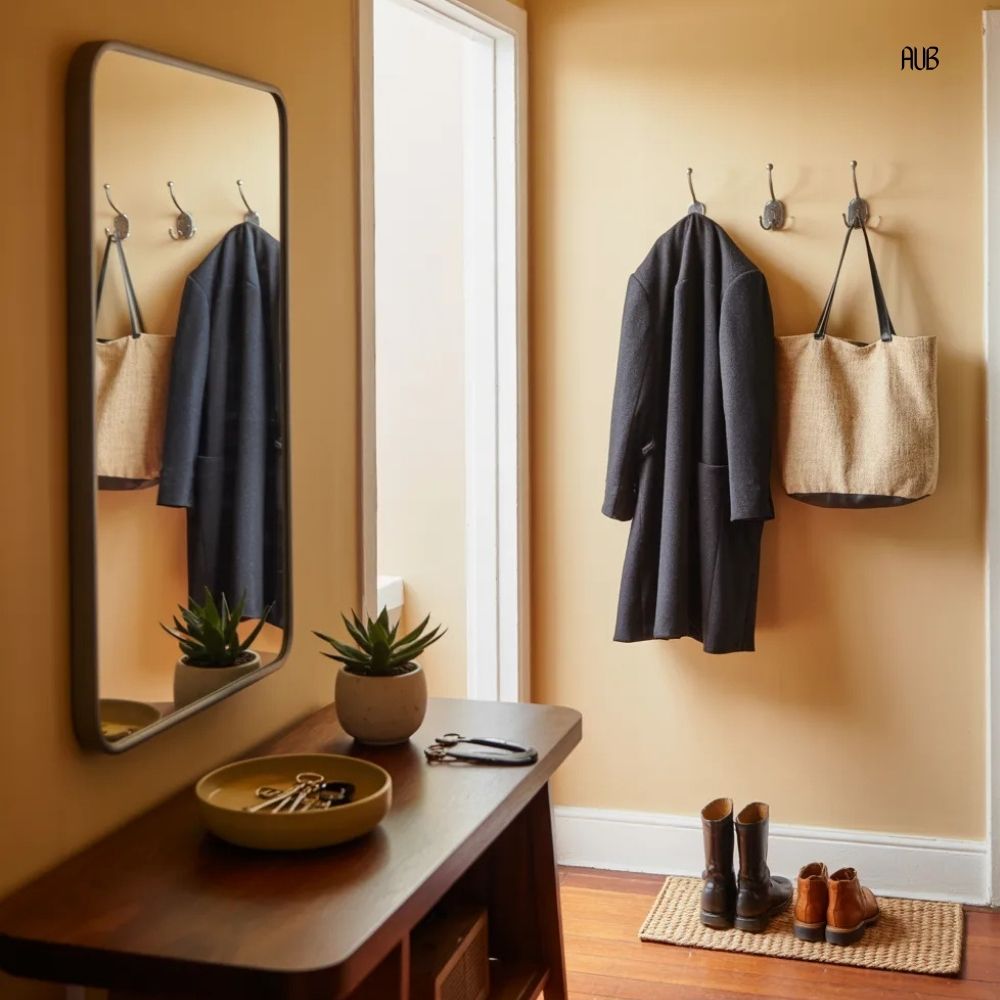
The Core Principle: Every Essential Gets a Permanent Landing Spot
A functional entryway system rests on one rule: if you use it daily, it must live near the door. Common essentials include:
- Keys
- Wallets
- Sunglasses
- Bags
- Work badges
- Headphones
When these items have clearly defined storage locations, the brain stops scanning multiple rooms. Predictability reduces stress.
Step 1: Install a Dedicated Key Station
Keys are the most frequently misplaced item in most households. Instead of placing keys on a random surface, create a visible key station directly inside the door.
This can be a small wall-mounted hook rack, a shallow bowl on a narrow console table, or a magnetic strip mounted discreetly.
Choose one method and make it permanent. The rule is simple: keys never travel past the entryway.
When you walk in, they go directly to the hook or bowl. When you leave, you retrieve them from that exact spot. It takes only a few days of repetition for this habit to feel automatic.
Step 2: Create a Contained Mail Drop
Unsorted mail contributes significantly to entryway clutter. Add one vertical mail organizer or shallow basket designated solely for incoming paper.
The container should be large enough to hold several days’ worth of mail but small enough to prevent accumulation for weeks. Set a weekly five-minute rhythm to sort it. This prevents buildup.
By containing mail intentionally, you prevent it from spreading across counters and mixing with personal items. Containment creates visual calm.
Step 3: Introduce a Bag and Jacket Zone
When bags and outerwear lack a defined home, they migrate to chairs, stairs, or bedroom floors. Install wall hooks at appropriate height for both partners. Assign hooks clearly if needed.
If space allows, add a slim bench with lower cubbies for shoes. The structure should allow for quick drop-off without bending into closets or navigating crowded shelves. Ease increases consistency. When storage is convenient, it is used.
Step 4: Add a Small “Pocket Empty” Tray
At the end of the day, small items accumulate in pockets. Coins, earbuds, lip balm, receipts, and access cards need temporary storage. Instead of scattering them across surfaces, place a small tray near the key station.
The rule becomes automatic: empty pockets into the tray before moving further into the house. This simple habit reduces surface clutter elsewhere and keeps frequently needed items centralized.
Step 5: Keep It Visually Light
An entryway can quickly become visually overwhelming if overloaded with furniture or decor. Choose narrow, functional pieces rather than bulky storage units. Limit decorative items. Prioritize utility.
The purpose of this space is smooth transition, not storage overflow. Visual simplicity reinforces mental clarity.
Step 6: Establish a 2-Minute Evening Reset
Even the best systems drift without maintenance. Each evening, take two minutes to restore the entryway to baseline.
Return stray shoes to their cubbies. Place keys back on hooks. Move misplaced mail into the container. Straighten bags.
This micro-reset prevents gradual buildup. Two minutes daily replaces twenty minutes of weekend reorganization.
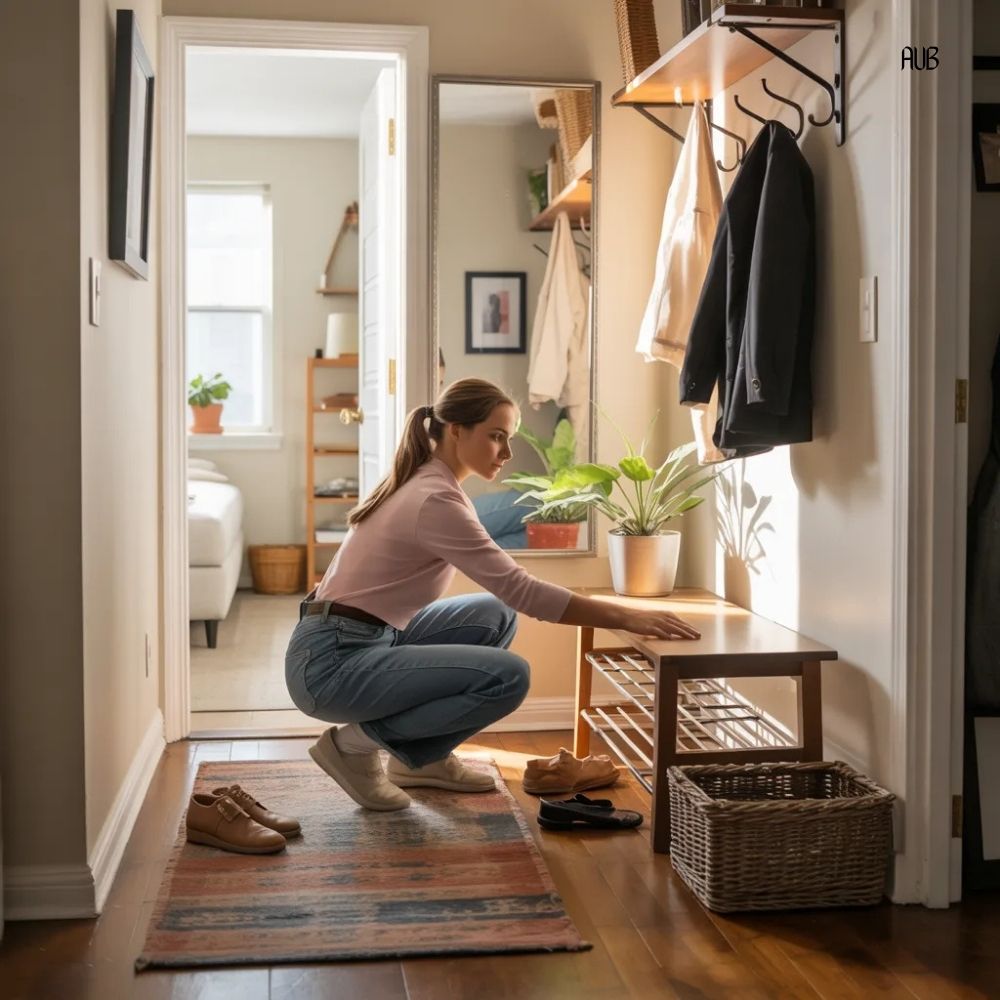
Why This Setup Works Especially Well for Couples
Shared homes amplify small inefficiencies. If one partner consistently moves items away from the entryway while the other expects them to stay near the door, confusion follows. Clear zones eliminate this mismatch.
When both partners understand that keys live on hooks, bags hang on assigned spots, and mail rests in one container, daily negotiation disappears. Ownership and expectation align automatically.
The Long-Term Impact
Small daily frustrations compound. So do small daily solutions. A structured entryway reduces repeated micro-stress. It improves punctuality. It lowers tension before leaving for work or returning home.
Over months and years, these small efficiencies contribute to smoother routines. The space just inside your door sets the tone for both departure and arrival. When that space functions clearly, daily life feels more organized before it even begins.
A simple entryway setup does not transform your entire home. It removes one of the most common and unnecessary stress points in shared living. And often, removing one recurring frustration is enough to change the rhythm of an entire day.