Opening the refrigerator should make dinner easier. In many homes, it does the opposite. Containers are stacked behind each other. Vegetables disappear into drawers and are forgotten. Condiments crowd door shelves. Leftovers blend into the background.
By the time you decide what to cook, you have already spent several minutes moving items around just to see what you have. When the fridge lacks structure, meal prep feels heavier than it needs to be. The issue is not the size of the refrigerator. It is visibility and zoning.
A well-organized fridge does not just look tidy. It reduces decision fatigue, shortens prep time, and increases the likelihood that ingredients are actually used. It turns dinner from a scavenger hunt into a straightforward process.
The system below focuses on layout, not aesthetics. The goal is speed, clarity, and sustainability.
Why Fridges Become Slow and Inefficient
Most refrigerators fill gradually without a clear logic system. Groceries are placed wherever space appears open. Leftovers are pushed to the back. Vegetables remain in drawers but are out of sight. Sauces and condiments multiply on door shelves.
Over time, the fridge becomes a storage container rather than a working system.
When you cannot see what you have immediately, you either overbuy or default to takeout. Both outcomes increase cost and reduce efficiency. A fridge designed for meal prep must prioritize visibility over density.
Step 1: Empty and Reset With Purpose
Before reorganizing, remove everything. Place items on the counter and group them by category:
- Proteins
- Dairy
- Produce
- Leftovers
- Condiments
- Ready-to-eat items
Discard expired items and consolidate duplicates. This reset reveals how much space you actually have and prevents layering new structure over existing clutter. Cleaning shelves at this stage also reinforces the transition from storage to system.
Step 2: Create Clear Zones Based on Function
Instead of organizing by random placement, organize by purpose. Assign refrigerator shelves to specific categories:
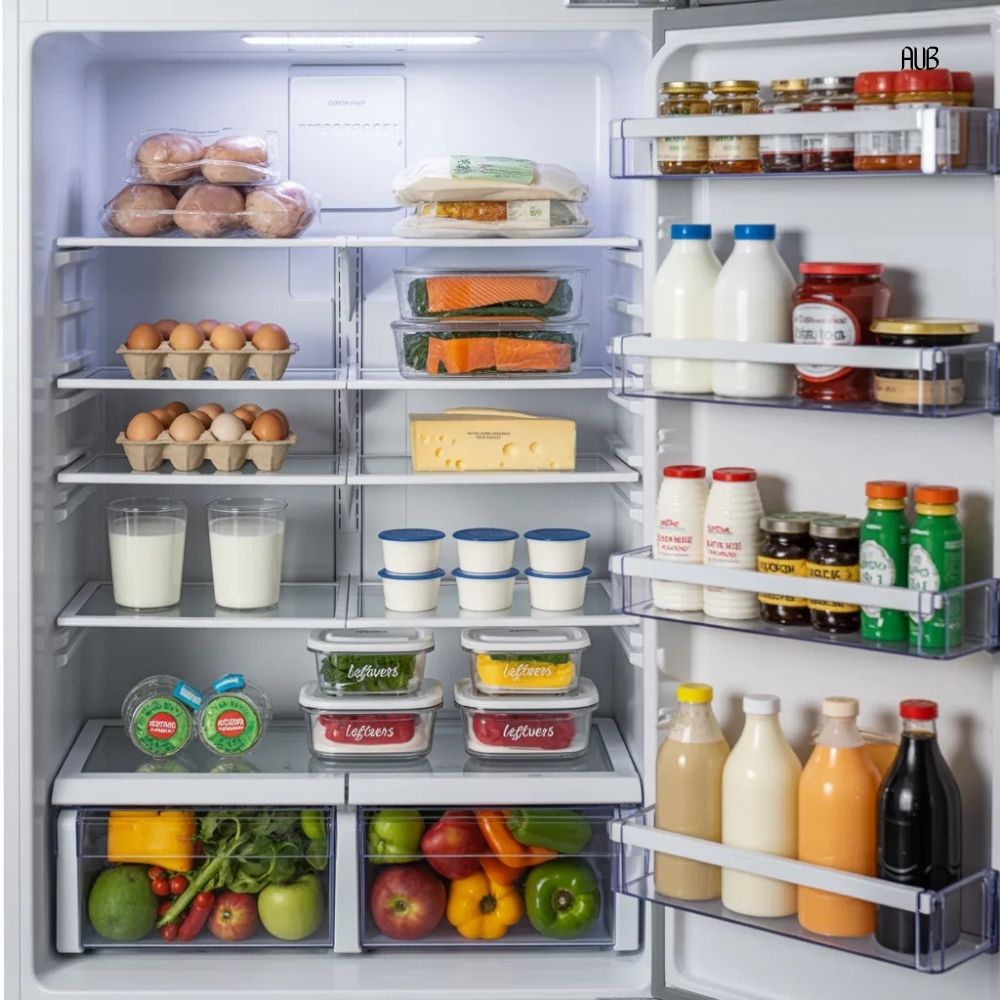
- Top Shelf: Ready-to-eat and leftovers
- Middle Shelf: Proteins and meal components
- Lower Shelf: Dairy and items used daily
- Drawers: Produce, divided by moisture type
- Door: Condiments only
When zones are defined clearly, you eliminate searching. Leftovers belong in one predictable place. Proteins live together. Vegetables remain accessible but not hidden behind other items. Clarity reduces scanning time.
Step 3: Keep Leftovers at Eye Level
Leftovers are most often forgotten because they are hidden behind taller items. Place leftovers on the top shelf in clear containers. Clear containers matter. Opaque containers hide contents and increase waste.
If you can see what remains from yesterday’s dinner immediately upon opening the fridge, you are more likely to incorporate it into today’s meal. Visibility drives usage.
Step 4: Group Proteins Together for Faster Planning
Proteins typically anchor dinner decisions. Instead of scattering them across shelves, store them in one zone. Keep raw meats in a tray or shallow bin to prevent leakage and to contain the category.
When proteins are grouped, you can assess dinner options quickly. Opening the fridge and seeing chicken, tofu, and ground turkey together shortens the “What should we eat?” conversation. Clustering speeds decision-making.
Step 5: Store Produce Strategically
Produce drawers are designed for humidity control, but they often become black holes. Use one drawer for high-moisture vegetables such as leafy greens and herbs. Use another for lower-moisture items like carrots and peppers.
If your refrigerator allows, use clear produce bins inside drawers to separate categories further. For frequently used vegetables, consider keeping them at eye level rather than fully hidden.
For example, washed spinach in a clear container on the middle shelf is more likely to be used than spinach buried in a drawer. Accessibility increases usage.
Step 6: Limit Door Shelves to Condiments
Door shelves experience temperature fluctuations. They are ideal for condiments but not for milk or delicate items. By restricting the door to sauces, spreads, and jars, you create a single predictable category zone.
Periodically review condiments and remove those that are expired or unused. Too many options slow decisions. Reducing visual noise speeds prep.
Step 7: Introduce a “Meal Prep Bin”
If you regularly cook multiple meals per week, dedicate one bin to prepped ingredients. For example, if you roast vegetables or cook grains in advance, store them in one clearly labeled area.
When dinner time arrives, you pull from that bin first. This reduces prep time dramatically and prevents cooked components from being forgotten. Containment supports repetition.
Step 8: Maintain a Weekly 10-Minute Reset
Even the best fridge organization will drift. Choose one consistent time per week to:
- Toss expired items
- Wipe visible spills
- Consolidate leftovers
- Confirm what proteins remain
This reset protects the system from collapsing. Ten minutes weekly prevents twenty minutes of frustration later.
How This System Speeds Up Meal Prep
When you open the fridge and see clearly defined zones, the process becomes intuitive. You know where proteins live. You know where leftovers sit. You can assess vegetable availability quickly.
Meal assembly becomes faster because searching disappears. Instead of spending five minutes locating ingredients, you move directly into cooking. Speed builds momentum.
Long-Term Impact
A well-organized fridge does more than improve aesthetics.
- It reduces food waste because items are visible.
- It lowers grocery spending because duplicates decrease.
- It shortens dinner decisions because options are clear.
- It speeds prep because searching disappears.
Over time, this system shapes the rhythm of weeknights.Cooking feels lighter. Groceries feel more intentional. Even busy evenings become more manageable.
The refrigerator is one of the most accessed spaces in the home. When it functions as a clear, predictable system, daily life becomes smoother in quiet but meaningful ways. And often, smoother evenings begin with simply opening the door and knowing exactly what you have.