As couples move into their sixties and beyond, daily rhythms often change. Work schedules may shift. Activity levels can look different from earlier decades. Metabolism naturally slows, and maintaining muscle mass requires more intention.
At the same time, shared routines around food become more important because what one partner eats often influences the other.
For many couples, the goal is not aggressive dieting. It is stability. Steady energy. Reduced abdominal weight gain. Stronger mobility. Fewer afternoon crashes. Better digestion. A sense of shared health rather than separate efforts. Snacking plays a meaningful role in that stability.
When chosen thoughtfully, simple snacks can help regulate blood sugar, maintain muscle, reduce overeating at main meals, and support cardiovascular health. When approached as a shared habit, snacks can also become small daily moments of connection rather than mindless grazing.
This guide outlines practical, easy-to-prepare snack ideas designed specifically for couples over 60 who want to maintain energy, manage belly weight gradually, and build sustainable eating habits together.
Why Snacking Changes After 60
After age 60, the body’s metabolic rate declines gradually. Muscle mass decreases if protein intake and resistance activity are not maintained. Insulin sensitivity may also shift, making blood sugar spikes more noticeable. These changes mean two things:
- First, total calorie needs may be slightly lower than before.
- Second, protein and nutrient quality become more important.
Large, carbohydrate-heavy snacks can lead to quick energy spikes followed by fatigue. In contrast, snacks that combine protein, fiber, and healthy fats provide sustained energy and reduce hunger swings.
For couples, shared snacking habits either support or undermine health goals. If one partner routinely reaches for sugary or highly processed snacks, the other is more likely to follow. Building a simple, structured snack rhythm together creates accountability without pressure.

Building a Shared Snack Rhythm
Before discussing specific foods, it helps to establish a rhythm. Many couples over 60 benefit from one planned mid-morning or mid-afternoon snack rather than constant grazing. Predictable timing reduces impulsive eating and supports blood sugar stability. Agree on:
- One consistent snack window
- Portion awareness
- Keeping snack ingredients visible and accessible
When snacks are prepped ahead of time and stored clearly, they are more likely to be chosen. Now let’s look at simple, couple-friendly snack options that support long-term health.
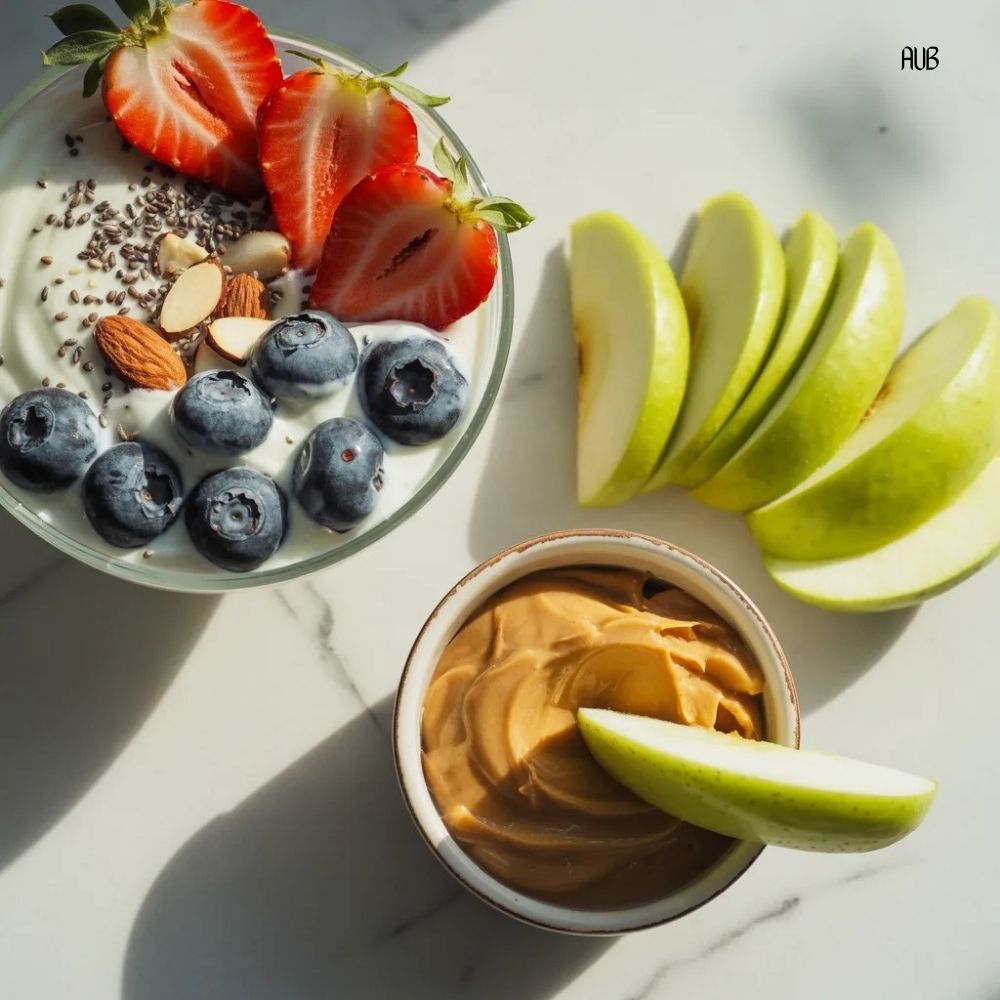
1. Greek Yogurt With Fresh Berries and Seeds
Plain Greek yogurt is rich in protein, which supports muscle maintenance and satiety. For adults over 60, maintaining muscle is essential for mobility, metabolic health, and independence.
To prepare this snack for two people, divide one and a half cups of plain Greek yogurt into two bowls. Top with a handful of fresh berries such as blueberries, raspberries, or sliced strawberries. Add one tablespoon of chia or flax seeds per bowl for fiber and omega-3 fatty acids. This combination supports:
- Digestive health through fiber
- Muscle maintenance through protein
- Heart health through healthy fats
- Steady blood sugar due to balanced macronutrients
If sweetness is desired, use a small drizzle of honey rather than flavored yogurt, which often contains added sugars. This snack works well as a shared mid-morning option and requires minimal preparation.
2. Apple Slices With Natural Nut Butter
An apple paired with one to two tablespoons of almond or peanut butter creates a balanced snack that combines fiber and healthy fats.
Slice one apple per person and measure the nut butter rather than scooping freely. Portion awareness becomes more important as metabolism slows.
The fiber in the apple slows carbohydrate absorption, while the protein and fats in the nut butter increase fullness. This helps prevent overeating at dinner, which can contribute to gradual abdominal weight gain.
For couples, preparing two small plates instead of one shared bowl encourages mindful portions and prevents passive overeating. This snack works especially well in the afternoon when energy often dips.
3. A Simple Green Smoothie for Two
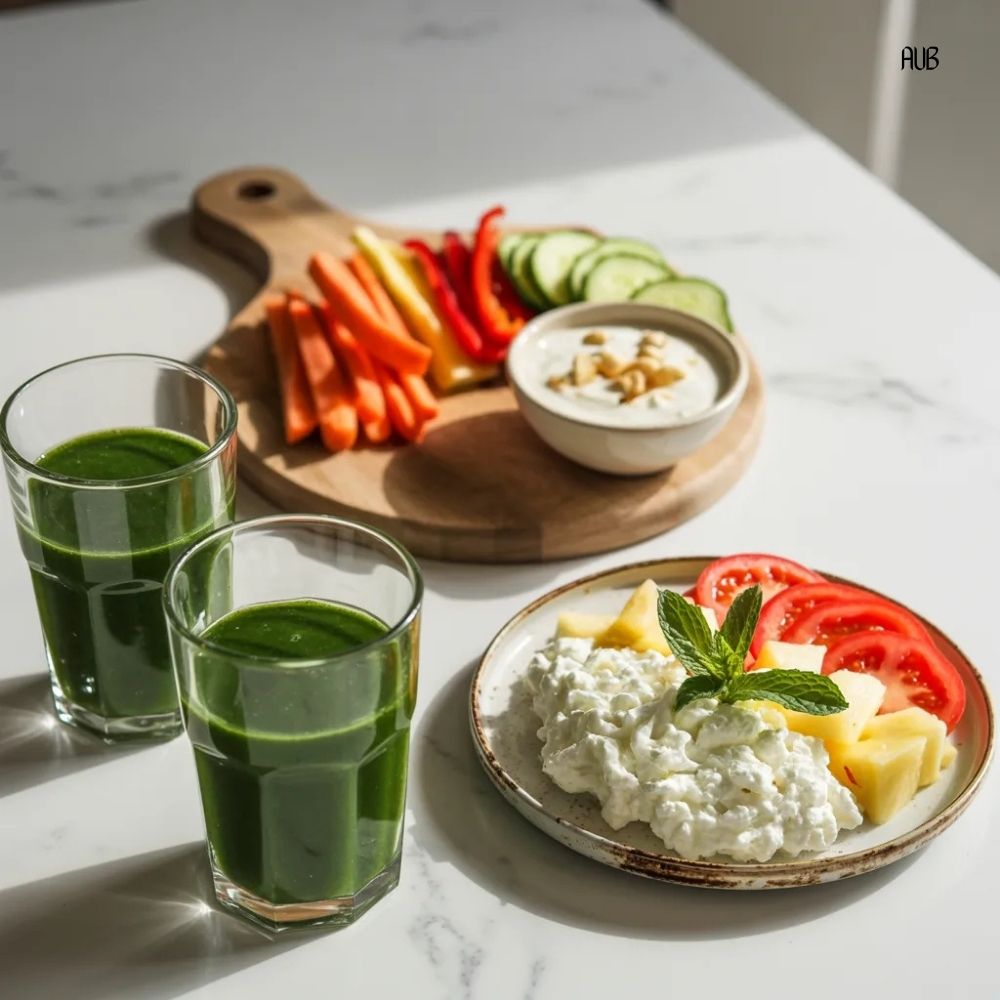
Smoothies can be efficient when appetite is lighter but nutrition remains important. For a couple-sized serving, blend:
- One small banana
- One large handful of spinach
- One tablespoon of chia seeds
- One cup of unsweetened almond milk
- Ice as desired
Divide into two glasses. This smoothie delivers fiber, potassium, and healthy fats while remaining light and easy to digest. It is especially helpful if one or both partners find solid snacks less appealing.
To increase protein, consider adding plain Greek yogurt or a small scoop of protein powder designed for older adults, depending on dietary needs. Keeping smoothies simple prevents calorie creep.
4. Crunchy Vegetables With Yogurt-Based Dip
Raw vegetables provide high volume with minimal calories. They are hydrating, rich in fiber, and satisfying due to their texture.
Cut cucumbers, carrots, bell peppers, or celery into sticks and store them in clear containers in the refrigerator. Pair with a dip made from:
- Plain yogurt
- A squeeze of lemon
- A pinch of salt
- A sprinkle of toasted sesame seeds
This snack supports digestion and provides protein without excess calories. It is especially helpful in the evening if one partner feels tempted to snack while watching television. Preparing vegetables in advance reduces friction. Visibility increases likelihood of use.
5. Cottage Cheese With Sliced Tomatoes or Pineapple
Cottage cheese is another high-protein option that supports muscle preservation. Serve half a cup per person with sliced tomatoes and a drizzle of olive oil for a savory option, or with fresh pineapple for a lightly sweet variation.
This snack is particularly beneficial after light strength training or walking sessions, as protein intake supports muscle repair. For couples who are focusing on maintaining strength and mobility, protein timing matters.
Supporting Belly Fat Reduction Realistically
It is important to approach abdominal fat reduction realistically after 60. Hormonal shifts, reduced metabolic rate, and changes in muscle mass mean that dramatic weight loss strategies are rarely sustainable or advisable. Instead, steady habits make the difference.
Balanced snacks contribute by:
- Preventing overeating at main meals
- Supporting muscle maintenance
- Stabilizing blood sugar
- Reducing reliance on processed foods
Combined with moderate strength training, walking, adequate sleep, and hydration, these small adjustments create meaningful long-term improvements.
How Couples Can Support Each Other
Shared accountability is powerful. Consider:
- Planning snacks together during grocery shopping
- Prepping ingredients side by side on Sunday
- Checking in weekly about energy levels and hunger patterns
When both partners align their habits, friction decreases. One person does not feel isolated in their effort. Health becomes a shared project rather than an individual burden.
A Weekly Snack Preparation Routine
To simplify consistency, choose one day per week to prepare:
- Washed and cut vegetables
- Portioned nuts or seeds
- Yogurt bowls prepped in containers
- Smoothie ingredients pre-measured in freezer bags
Preparation reduces decision fatigue and supports adherence. Keep the fridge organized so snack items are visible at eye level.
Long-Term Benefits of Simple, Structured Snacking
Over time, balanced snacking supports:
- Stable weight management
- Stronger muscle preservation
- Improved digestive health
- Reduced afternoon fatigue
- Lower reliance on high-sugar convenience foods
For couples over 60, the goal is not perfection. It is sustainability. Shared snack habits create a rhythm that supports health quietly and consistently. When both partners prioritize simple, nutrient-dense options, the cumulative effect becomes noticeable in energy levels, mobility, and overall well-being.
Small daily choices compound. Choosing structured, balanced snacks is one of the simplest ways couples can support each other’s health in this stage of life.
If you would like, I can next expand this into a full weekly meal and snack framework specifically designed for couples over 60 who want to maintain weight and energy steadily.