Vegetables are central to a healthy diet. They nourish the body with fiber, vitamins, minerals, and plant compounds that support immune function, digestion, and long-term wellness.
Many people choose leafy greens and familiar vegetables because they are affordable, accessible, and versatile. Yet recent research and nutrition insights show that how we prepare and store vegetables can influence both their nutrient content and how comfortably they’re digested.
This article explores common vegetable preparation habits and offers practical, positive guidance on how to enjoy familiar greens while preserving their benefits and supporting overall health.
The focus here is not fear-based. It is about making better use of everyday food, understanding simple science that applies to nutrition, and giving you tools that make healthy eating easier and more effective.
Why Cooking and Storage Matter: A Balanced Perspective
Vegetables are complex. Their cellular structures hold vitamins and beneficial phytochemicals, but those same structures can be sensitive to heat, oxygen, water, and time. When vegetables are cooked for too long or stored improperly, some nutrients diminish. This does not make the food harmful, but it can reduce the value we get from it.
At the same time, different cooking methods unlock different benefits. Some nutrients become more available with gentle cooking. For example, lightly steaming carrots increases access to certain antioxidants. The key is balance: choose techniques that preserve nutrients while making food pleasurable and digestible.
1. Understanding What Happens When Greens Are Overheated or Overcooked
Leafy greens like spinach, water spinach, kale, and Swiss chard are nutritional powerhouses. They supply fiber, vitamins A and C, and folate. However, when greens are cooked at high heat for long periods, water-soluble nutrients begin to break down.
For example, vitamin C dissolves in water and degrades with heat. When greens are boiled or cooked for many minutes, some of those nutrients simply leach into the cooking water or break down. If you then discard the cooking liquid, you lose those benefits.
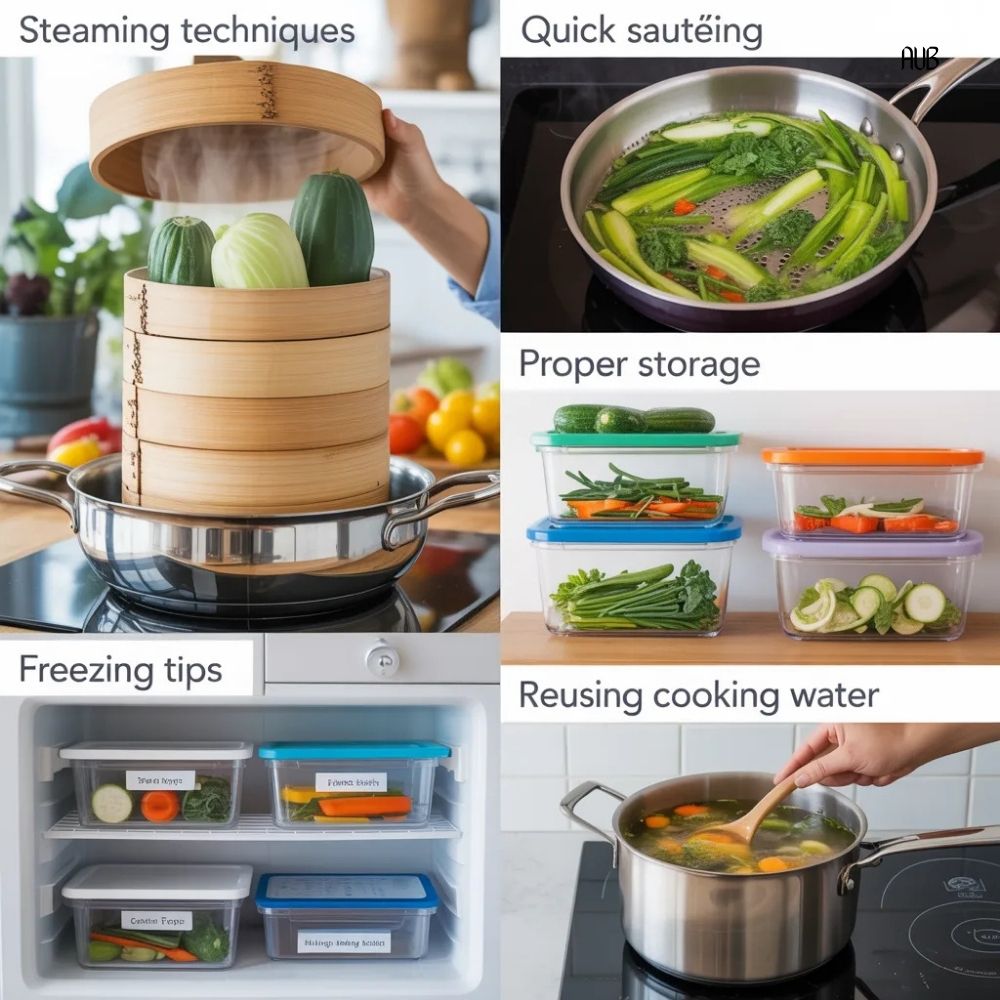
A practical way to retain nutrients is to use brief, gentle cooking methods such as steaming, sautéing with minimal liquid, or quickly blanching vegetables. These approaches soften the fiber enough to support digestion while retaining nutritional value.
2. Why Storing Cooked Vegetables Matters
Leftovers are convenient, but timing and storage method influence how vegetables hold up. If cooked vegetables sit at room temperature too long before refrigeration, bacterial growth accelerates.
Even in the refrigerator, nutrient degradation continues slowly over hours and days. Vitamins such as folate and vitamin C are particularly vulnerable to oxidation and can decline over time.
To protect nutrient quality and food safety, store cooked vegetables promptly in airtight containers within two hours of cooking. Use them within one to two days. For longer storage, freezing can preserve many nutrients better than refrigeration alone.
When reheating, use gentle temperature rather than boiling. Short bursts of heat help protect vitamins and prevent loss of texture and flavor.
3. The Right Way to Prepare and Combine Vegetables
Certain preparation methods make vegetables easier for the body to use. When working with leafy greens, cut them into manageable pieces rather than tearing them roughly. Smaller cuts expose more surface area, allowing gentle heat or bite-size texture without prolonged cooking.
Pairing vegetables with a source of healthy fats — such as olive oil, avocado, or seeds — enhances nutrient absorption. Some plant compounds are fat-soluble, meaning they require fat to be adequately absorbed. A simple drizzle of olive oil or a handful of toasted seeds on cooked greens can improve the nutritional benefit of a meal.
For example, a sauté of greens with olive oil and garlic not only tastes satisfying but also helps the body absorb more of the fat-soluble vitamins present in the vegetables.
4. Making Familiar Vegetables More Digestible
Some people find raw vegetables harder to digest, especially if eaten in large quantities after a meal. Cooking softens fiber and breaks down plant cell walls, making nutrients more accessible and easing digestion.
However, overcooking can make greens mushy and less appealing, which sometimes leads to overeating of more calorie-dense foods later. Gentle cooking balances texture and digestion.
If you experience gas or bloating after eating vegetables, consider pairing them with foods that support digestion, like ginger, herbs, or fermented side dishes such as yogurt or pickles in moderation.
Eating slowly, chewing thoroughly, and pairing vegetables with protein or healthy fats can help balance digestion without compromising nutrient intake.
5. Simple Best Practices for Everyday Vegetable Preparation
Below are practical suggestions that fit easily into everyday life:
- Steaming or quick sautéing helps preserve nutrients and improves digestibility.
- Minimal water cooking — using just enough liquid to prevent sticking — protects water-soluble vitamins.
- Adding vegetables later in the cooking cycle for mixed dishes preserves texture and nutrients.
- Cooling and storing cooked vegetables promptly in airtight containers protects quality.
- Freezing leftovers within a day preserves nutrients better than prolonged refrigeration.
- Using cooking water from steamed vegetables in soups or sauces recovers nutrients that would otherwise be lost.
These small adjustments change how vegetables perform in your diet without requiring new ingredients or complicated techniques.
6. Positive Outcomes of Better Vegetable Preparation
When vegetables are prepared and stored with attention, the benefits extend beyond nutrient preservation:
- Better Flavor and Texture: Vegetables taste fresher and more satisfying, which encourages regular consumption.
- Improved Digestive Comfort: Gentler cooking methods reduce digestive discomfort for many people.
- Greater Meal Satisfaction: Meals that combine good flavor, pleasing texture, and hearty vegetables feel more balanced.
- Increased Confidence in Home Cooking: Understanding how simple adjustments make a difference reinforces confidence over time.
This is not about perfection. It is about practical choices that fit daily life.
7. Why This Matters in the Long Run
Making vegetables part of daily meals is one of the most consistent contributors to long-term health. Vegetables support immune function, digestive regularity, cardiovascular health, and weight management. When you prepare them thoughtfully rather than habitually, their benefits increase accordingly.
Choosing better preparation and storage methods is not about short-term results. It reinforces a pattern of care that supports sustained well-being.
Over time, small changes in how vegetables are cooked, stored, and combined accumulate into meaningful impacts on daily nutrition, food satisfaction, and overall health.
Final Thoughts
Vegetables are foundational elements of healthy eating. Instead of avoiding familiar greens or getting discouraged by nutrient loss myths, it is more useful to understand how simple choices in preparation and storage affect the food’s performance.
With gentle cooking techniques, careful storage, and intentional combinations, vegetables can contribute more fully to your daily nourishment. These practices honor both the nutritional value of the food and your relationship with it.
Rather than viewing preparation as a chore, view it as an investment. This investment pays off in meals that are more satisfying, more nutritious, and better aligned with long-term health goals.
Small changes in how we cook and store vegetables make everyday food feel more supportive, enjoyable, and meaningful.