Few household frustrations feel as minor and as repetitive as a dead phone battery. Yet in shared spaces, small inconveniences compound. One charger disappears into a work bag. Another cable frays.
One partner plugs in first and forgets to mention it. The other wakes up to 12 percent battery and starts the day already irritated. The issue is not electricity. It is structure.
In many bedrooms, charging happens informally. Cables are shared loosely. Outlets are limited. Extension cords snake across floors. Devices get plugged in wherever space is available. Over time, the arrangement feels chaotic, even if no one openly complains.
A double-charger nightstand system eliminates this friction with a single adjustment: two permanent, clearly assigned charging spots that do not move, overlap, or require negotiation.
This small environmental change improves efficiency, protects sleep quality, and reduces subtle tension around shared space.
Why Shared Charging Often Fails
When one charger is shared between two people, there is an unspoken assumption that coordination will happen smoothly. In reality, evenings are rarely synchronized.
One partner may go to bed earlier. The other may scroll longer. One may need a phone fully charged for early meetings. The other may be less dependent. Without a defined system, small moments accumulate:
- “Did you use my charger?”
- “Can I unplug yours for a minute?”
- “I thought you brought the extra cable.”
- “Why is this one not working again?”
These are minor exchanges, but repeated daily, they create friction. The solution is not better communication. It is better design.
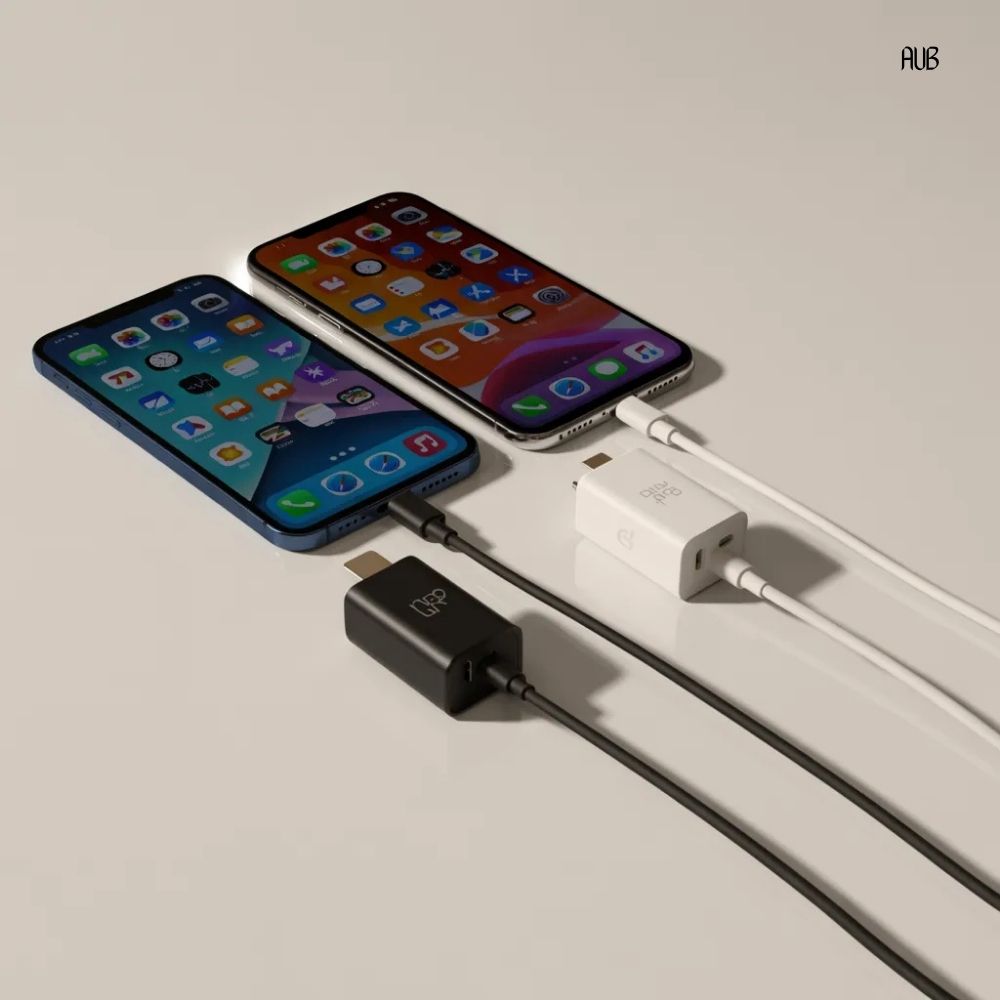
The Core Principle: Two Chargers, Two Spots, No Sharing
The foundation of this hack is simple. Each partner has:
- One dedicated charging cable
- One dedicated outlet or port
- One consistent location on their side of the bed
The chargers remain permanently installed. They do not travel to the living room. They do not move into backpacks. They are bedroom-only tools.
This separation removes negotiation entirely. No one borrows. No one searches. No one assumes. Each side becomes self-sufficient.
Step 1: Upgrade From Single Outlet to Multi-Port Hub
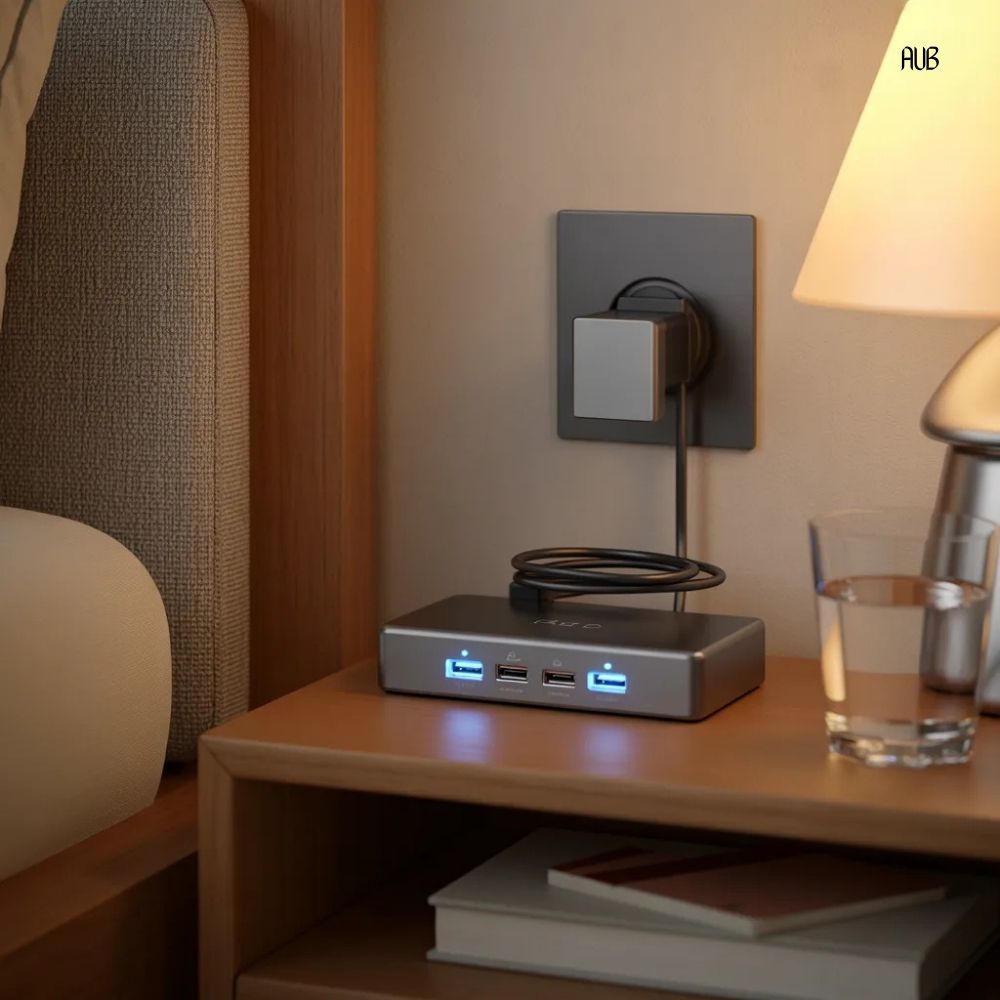
Most bedside outlets are limited. Instead of relying on wall sockets directly, install a compact multi-port charging hub or surge protector with USB-C and USB-A ports.
Choose a model that includes:
- At least two high-speed charging ports
- A flat plug that fits behind furniture
- A short, organized cable footprint
This upgrade ensures that both partners can charge devices simultaneously without sacrificing speed.
If space allows, mount the hub discreetly behind the nightstand using adhesive clips or cable management brackets. This keeps wires from spilling onto the floor. A small hardware adjustment prevents daily cable rearrangement.
Step 2: Assign and Label Cables Permanently
Assign one cable per partner and keep it consistent. If both partners use similar devices, choose different colored cables or use subtle labels near the base. This avoids confusion in dim lighting.
Cable identity reduces subconscious friction. When each person sees their designated cable in the same place every night, charging becomes automatic rather than negotiated.
Avoid long, tangled cords. Choose cables that are long enough to reach comfortably but short enough to avoid draping across the bed. The visual difference alone improves the sense of order.
Step 3: Introduce a Bedside Charging Rule
The physical setup works best when paired with a simple habit rule. For example:
- Phones charge overnight in their designated spot.
- Cables remain in place at all times.
- If a cable is removed for travel, it is replaced immediately upon return.
These rules are not rigid policies. They are maintenance habits. Consistency ensures that the system remains friction-free rather than slowly degrading back into chaos.
Step 4: Add a Secondary Charging Basket for Daytime Use
One reason bedside chargers disappear is that they double as living room or travel chargers. To prevent this, create a small charging basket in a central home location. Place extra cables there for daytime use.
This separation keeps bedroom chargers stable while still allowing flexibility elsewhere. When each area has its own charging tools, cross-room borrowing stops naturally.
Why This Hack Improves More Than Battery Life
At first glance, this system appears purely practical. In reality, it supports three deeper improvements.
1. It Reduces Micro-Tension
When charging is automatic, small nightly negotiations disappear. The bedroom remains a calmer environment rather than a place for logistical corrections.
2. It Protects Sleep Quality
When phones have a defined resting place, the habit of holding devices in bed decreases. Reduced late-night scrolling supports earlier wind-down and better sleep cycles.
3. It Encourages Personal Responsibility
Each partner maintains their own charging setup. There is no dependency or borrowing. This subtle autonomy prevents frustration.
Small systems reinforce partnership balance.
Optional Upgrade: Add a Device Charging Station Drawer
For couples who charge more than phones, consider adding a slim drawer insert with cable holes for watches, earbuds, or tablets.
Keeping smaller devices contained prevents clutter from spreading across surfaces. The key is containment rather than accumulation.
Long-Term Impact
The double-charger nightstand hack may seem minor, but shared living is shaped by repeated small systems.
When everyday friction points are removed, emotional energy is preserved. Over months and years, these micro-adjustments compound into smoother routines.
A peaceful bedroom is built on intentional systems. Clear charging zones are one of the easiest ways to create that stability. And in shared spaces, stability often matters more than decoration.