For many couples, Sunday carries a subtle tension. The day begins slowly, often with good intentions, but by late afternoon a familiar pressure appears.
Laundry may still be unfinished. Groceries might not be planned. Emails linger. The house feels slightly unsettled. Instead of ending the weekend feeling restored, many people slide into Monday feeling reactive. The issue is not lack of motivation. It is lack of structure.
When Sundays remain undefined, responsibilities drift into the evening. Small tasks accumulate quietly. The weekend closes without a sense of completion.
A “Sunday Reset Kit” solves this by creating a contained, repeatable ritual. It transforms vague productivity into a structured one-hour system. It prevents the weekend from dissolving into scattered chores while still preserving rest.
The key is to design the kit thoughtfully so that it feels intentional rather than overwhelming. When built correctly, the reset becomes something you look forward to rather than avoid.
Why a Reset Ritual Changes the Tone of the Entire Week
Human beings respond well to closure. When one cycle ends clearly, the next begins with less friction. Without closure, unfinished tasks linger mentally. That lingering awareness increases background stress.
A Sunday reset provides a psychological boundary between rest and responsibility. It allows you to close open loops before Monday arrives.
When you begin the week with clean counters, a visible meal plan, refreshed towels, and clarified schedules, the entire household feels more stable.
This stability reduces decision fatigue and prevents early-week tension. The purpose of the kit is not to maximize productivity. It is to concentrate it.

Step One: Define the Scope of the Reset
Before assembling anything physical, decide what your Sunday reset should include. The scope must be realistic. A reset is not a full house cleaning. It is a maintenance pass across high-impact areas. Most couples benefit from focusing on five categories:
- Kitchen refresh
- Laundry reset
- Surface declutter
- Weekly meal preview
- Calendar alignment
Limiting the reset to these categories keeps it achievable within sixty to ninety minutes. When the scope is contained, momentum increases.
Step Two: Build the Physical Kit
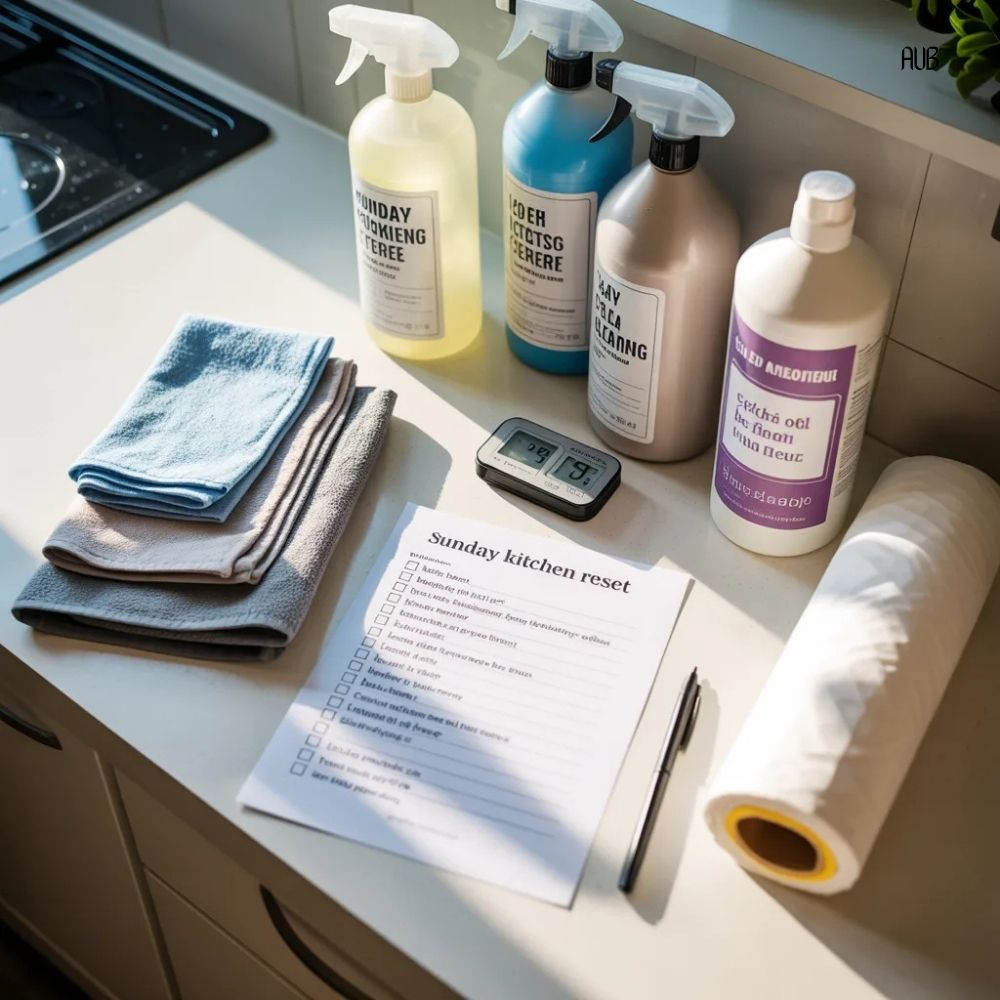
The physical kit is not decorative. It is functional. Choose a medium-sized basket or storage bin that holds your reset tools. Keep everything in one place so there is no searching when the ritual begins. Your kit might include:
- Microfiber cloths
- All-purpose cleaner
- Glass cleaner
- A small timer
- Printed reset checklist
- Pen for notes
- Laundry stain remover
- Trash bags
The goal is convenience. When tools are pre-assembled, starting feels easier. Label the bin clearly so it has a designated home. This reinforces repetition.
Step Three: Create a Printed Reset Checklist
A checklist eliminates mental guesswork. Write out the reset steps clearly and keep the list inside the kit. The checklist might include:
Kitchen
- Clear counters completely
- Wipe surfaces and stove
- Empty dishwasher
- Take out trash
Laundry
- Wash one full load
- Fold and put away immediately
Living Areas
- Return items to designated places
- Clear coffee table and entryway
Planning
- Preview week’s dinners
- Review calendar
- Confirm shared commitments
The checklist should fit on one page. Avoid adding extra tasks once the system begins. The power of the reset lies in repetition.
Step Four: Add a Small “Atmosphere Upgrade”
If the reset feels purely utilitarian, it may become tedious. Introduce one small sensory element that signals the ritual has begun. This might be:
- Playing a specific playlist reserved for Sundays
- Lighting one candle
- Brewing coffee before starting
- Setting a visible timer
The atmosphere element does not need to be elaborate. It simply distinguishes the reset from ordinary chores. Consistency turns the ritual into something recognizable.
Step Five: Divide Roles Clearly
If both partners participate, divide responsibilities before starting. One person handles kitchen and meal preview while the other manages laundry and decluttering, or rotate weekly. Clear division prevents overlap and reduces silent frustration.
Avoid micromanaging each other’s tasks. The reset should feel cooperative rather than supervised. Completion matters more than perfection.
Step Six: Use a Timer to Protect Energy
Set a visible timer for the reset window. Sixty minutes is often sufficient. The timer serves two purposes. It prevents the reset from expanding endlessly, and it creates urgency that improves focus. When the timer ends, the reset ends.
If something remains unfinished, move it to the following week unless it is urgent. Boundaries protect sustainability.
Step Seven: Close With a Small Planning Conversation
After physical tasks are complete, sit down together for a brief planning alignment. Discuss:
- Major commitments for the week
- One shared priority
- Any anticipated busy evenings
This conversation should remain brief and practical. It prevents midweek surprises and reinforces partnership alignment. Because the environment has already been reset, this discussion feels calmer.
Why This System Feels Productive Without Being Heavy
The Sunday reset works because it compresses small maintenance tasks into a single window rather than scattering them across the weekend. Instead of thinking all day about what still needs to be done, you address high-impact areas intentionally.
This clarity creates psychological relief. Importantly, the reset ends decisively. You return to relaxation afterward without lingering mental to-do lists.
Keeping It Sustainable Over Time
The most common mistake is expanding the reset too quickly. Resist adding deep-cleaning tasks, organizing projects, or ambitious home upgrades.
If the ritual begins to feel overwhelming, scale it back rather than abandoning it. The reset should remain predictable and light.
Over time, you may refine the checklist based on what matters most to your household. Consistency matters more than intensity.
Long-Term Impact
When repeated weekly, the Sunday reset changes the rhythm of the entire household. The kit itself becomes symbolic. Seeing the basket on Sunday morning signals forward movement rather than procrastination.
Over months, this simple system builds stability. Stability reduces tension. Reduced tension strengthens partnership. Weekends still contain rest and flexibility. The reset does not eliminate relaxation. It anchors it.
A well-designed Sunday Reset Kit does not turn you into productivity experts. It gives structure to what would otherwise remain scattered.
And structure, applied consistently and calmly, is often what transforms ordinary weekends into something that feels balanced and complete.