Most kitchen tension does not come from disagreement about what to cook. It comes from movement. Two people reaching for the same cutting board. One person washing vegetables while the other tries to sauté. A sink filling while counters are still crowded. A finished dish waiting while someone searches for serving plates.
When cooking lacks structure, even cooperative partners can feel slightly in each other’s way. The issue is not personality. It is sequencing.
The “Prep and Plate” Method introduces a simple shift: separate cooking into two distinct phases. First, complete all preparation tasks fully. Second, transition into plating and assembly intentionally.
This division reduces overlap, shortens cleanup, and creates a smoother rhythm in shared kitchens. It works because it eliminates multitasking chaos and replaces it with clear roles.
Why Kitchen Friction Builds So Easily
In most weeknight dinners, tasks overlap constantly. Someone chops while something else is already on the stove. Ingredients are being measured while others are still being washed. Finished components are set aside without a clear destination. The sink fills while counters remain crowded.
When two people operate in this environment, even small misalignments feel amplified. Without structure, cooking becomes reactive. The “Prep and Plate” Method restores sequence.
What the Method Means in Practice
The method divides dinner into two intentional stages:
- Prep Phase
- Plate Phase
No cooking begins until prep is fully complete. No plating begins until cooking is fully finished. This sequencing may feel slower at first, but it actually reduces total time because it eliminates mid-process searching and congestion.
Phase One: The Prep Phase
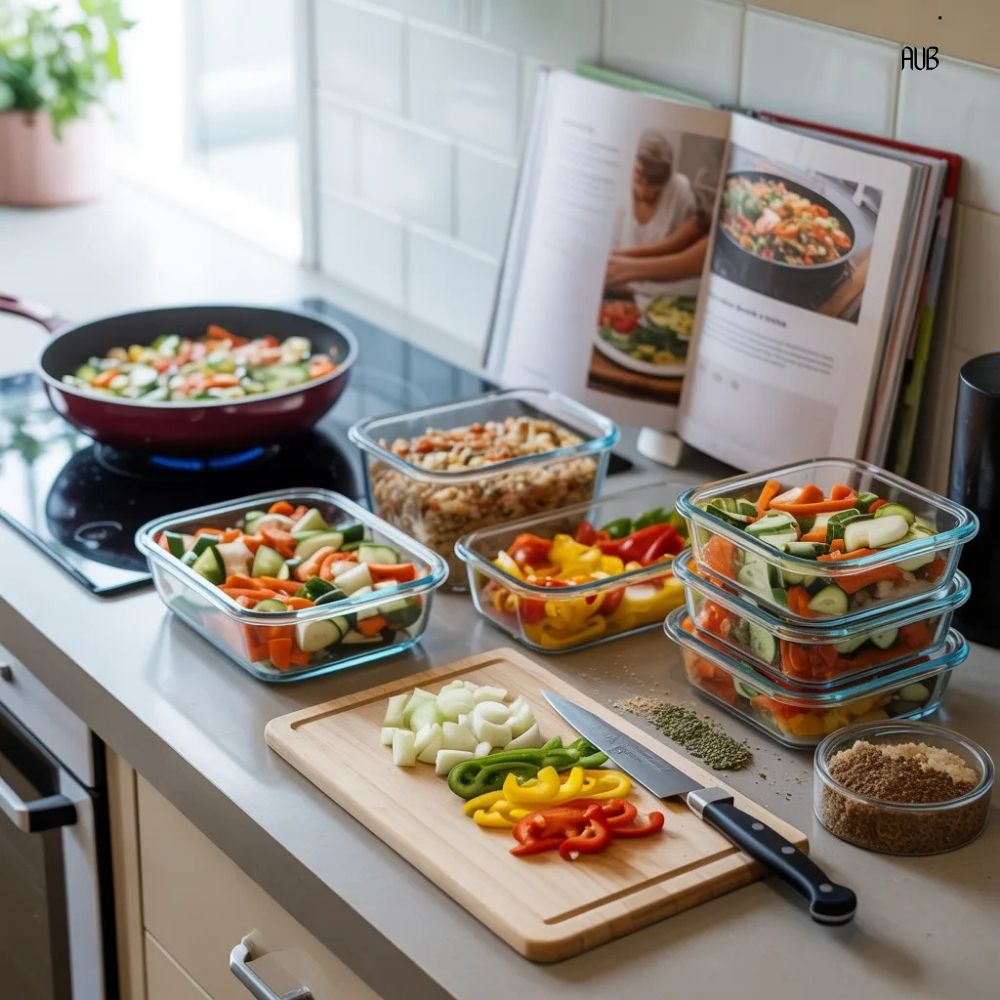
The prep phase includes all tasks required before heat is applied. This includes:
- Washing and chopping vegetables
- Measuring spices
- Marinating protein
- Draining canned goods
- Preheating ovens
- Setting out tools and pans
- Filling pots with water
The rule is simple: everything is prepared and organized before the stove turns on. Ingredients should be arranged neatly on the counter in the order they will be used.
This approach mirrors professional kitchens, where mise en place reduces error and confusion. In shared kitchens, the prep phase allows both partners to move deliberately without urgency.
Dividing Roles During Prep
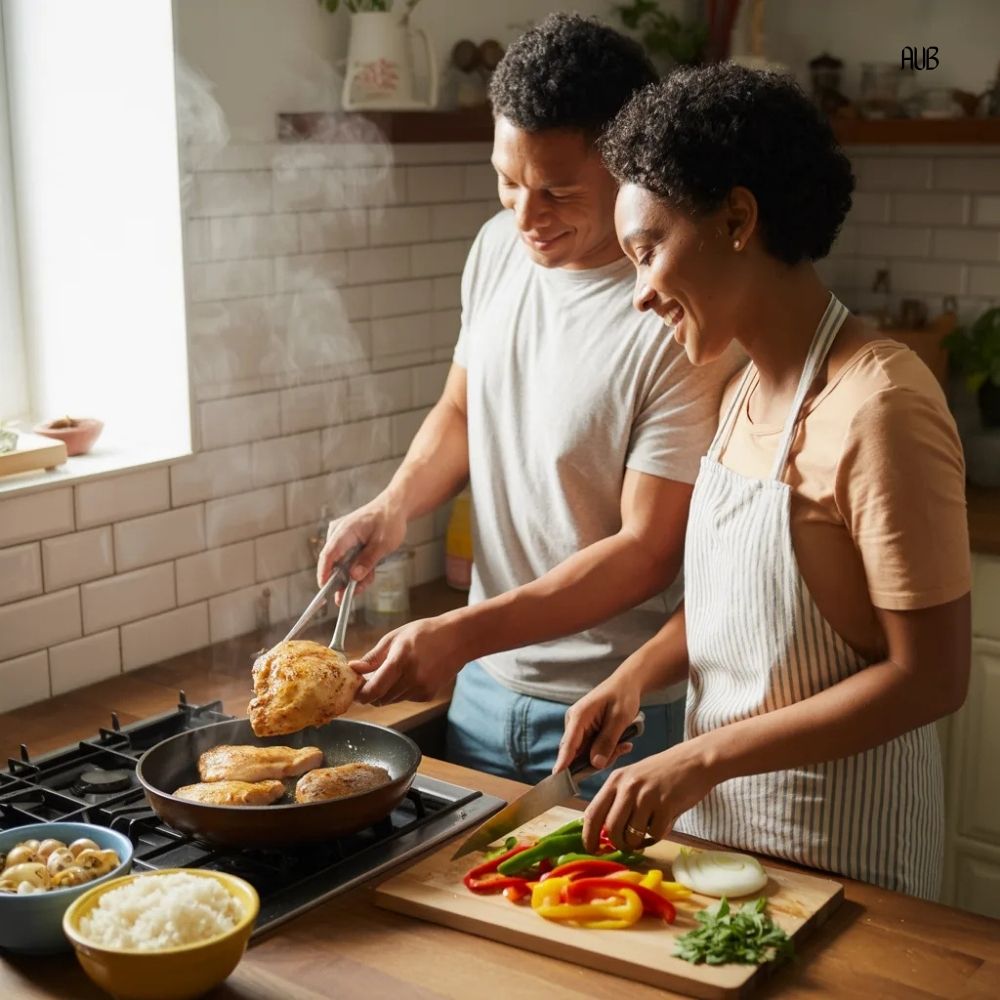
To reduce congestion, assign roles clearly during prep. One partner handles protein preparation. The other manages vegetables and bases.
Alternatively, one person works on chopping while the other sets up cookware and measures seasonings.
The key is clarity. When roles are defined before beginning, movement feels coordinated rather than overlapping. Because nothing is actively cooking yet, there is no rush.
The Transition Between Phases
Once all prep is complete, pause briefly. Clear scraps into compost or trash. Rinse cutting boards if necessary. Wipe the counter lightly.
This reset marks the transition into cooking. By entering the cooking phase with organized counters and prepared ingredients, you remove mid-process clutter.
Phase Two: The Plate Phase
After cooking is finished, resist the urge to serve directly from the stove or pot immediately. Instead, shift intentionally into plating. Plating includes:
- Portioning food onto individual plates
- Adding finishing elements such as herbs or sauce
- Wiping plate edges
- Setting the table fully before sitting
When plating is intentional, the meal feels complete rather than hurried. This phase also allows one partner to plate while the other begins loading dishes into the sink or dishwasher. Parallel tasks remain separate.
Why This Method Reduces Friction
The greatest source of kitchen friction is multitasking under heat pressure. When ingredients are being chopped while pans are already hot, urgency increases. Urgency increases tension. Tension reduces patience. By completing prep entirely first, you remove that time pressure.
The second benefit is spatial clarity. During prep, counters are organized intentionally. During plating, counters are partially cleared. Each phase has a single focus. Focus reduces chaos.

Handling Quick Weeknight Meals
You might assume this method works only for elaborate dinners. In reality, it improves even simple meals.
For example, consider pasta with vegetables. During prep, chop garlic, slice zucchini, measure salt, and grate cheese. Set everything out neatly. Only after that should you begin heating oil and boiling water.
Because ingredients are ready, cooking becomes fluid. After pasta is tossed, shift to plating carefully instead of serving directly from the pot. Even simple meals feel more controlled.
Working in Small Kitchens
The “Prep and Plate” Method is particularly helpful in small kitchens. Limited counter space amplifies congestion.
By dividing tasks into phases, only one type of activity occupies the counter at a time. Prep uses the space fully. Cooking reduces clutter. Plating clears space further. Sequential use of space feels calmer than simultaneous use.
Reducing Cleanup Overload
Another benefit of this method is cleaner pacing. When prep scraps are cleared before cooking begins, you avoid accumulating mess throughout the entire process.
After plating, only cookware remains. This containment makes post-dinner cleanup feel manageable rather than overwhelming.
Long-Term Effect on Shared Living
Small systems shape shared environments more than dramatic changes. The “Prep and Plate” Method removes one of the most common friction points in shared kitchens: overlapping movement under time pressure.
It replaces reactive multitasking with deliberate phases. Over weeks and months, the shift becomes natural. Dinner preparation feels smoother. Cleanup shortens. Tension decreases. Cooking together becomes collaborative rather than crowded.
And often, reducing kitchen friction is not about adding tools. It is about changing sequence. Sequence creates clarity. Clarity creates calm. Calm makes shared evenings easier.